


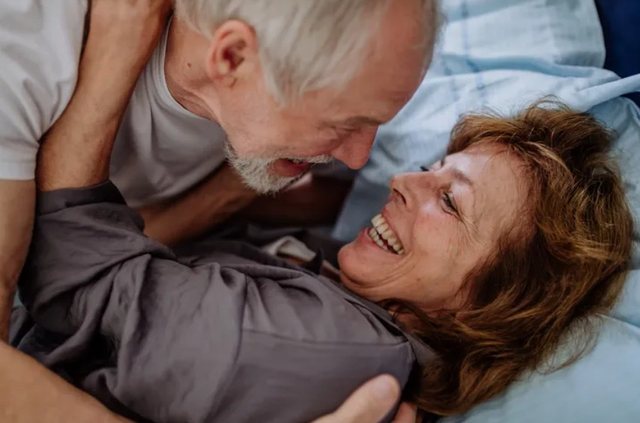
There are many mysteries surrounding sex in the 60s, 70s and beyond.
Look online and you'll find countless threads where curious young people ask if older people are having sex, and if so, what it's like at that age.
The mystery surrounding older sex stems from a combination of factors, according to Shannon Chavez, a licensed psychologist and sex therapist in Beverly Hills, California.
First, social taboos and ageist attitudes have led to a marginalization of older people's sexuality. No one wants to imagine people their grandparents' or parents' age having sex.
The encouraging reality is that those who are sexually active continue to enjoy and desire sex, even when they are not in a relationship. Four in 10 people ages 65-80 are still sexually active, according to a 2018 study by the National Survey on Healthy Aging. And regardless of whether or not they have an active sex life, nearly two-thirds of seniors said they are interested in sex. More than half said sex is important to quality of life.
To shed some light on sex after the 70s, sex therapists have spoken.
What do we not know?
Your need to feel wanted doesn't disappear with age
The frequency of intercourse decreases, but the quality often increases.
Erectile dysfunction in men does not mean that it ends the sex life.
Aging can cause physical barriers to sex, but there are solutions.
Sexual adventures and creativity expand with experience.
Yes, sexual intercourse can be painful, especially for women.
Sometimes, sex is more about emotional connection than physical.
Sexual desire is "supposed" to be spontaneous, but this is not always the case, especially as we age.
It's all about managing your expectations.


