

Dialogue with Alain de Botton: Isolation in isolation shows that we do not want to meet ourselves

2020-04-09 15:14:17
Erjon Uka
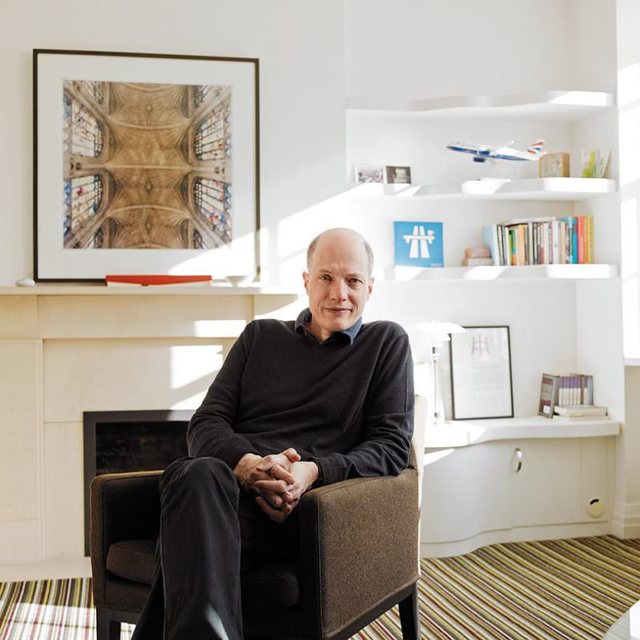
It was 1650 when Blaise Pascal noticed that "all the lack of happiness in people comes only from one thing: from ignorance to staying quiet in a room." Four centuries after the reflection of the French mathematician and philosopher, man is compelled to reckon with domestic isolation for the common good. But if that "lack of happiness" is reawakened, how do we do it?
Swiss philosopher and writer Alain de Botton attempts to provide some answers. "As in a very long train journey, time is already passing slowly and space is limited, but not our minds. If it rains outside, nothing stops us from imagining a village in the spring. "If we know how to deal with isolation, when the door reopens we will be able to deal with a lot of things."
But staying home alone is not easy.
At the moment the difficulty is attributed to isolation, but I think it is a general problem: it is always difficult to stay alone because we have many thoughts which are difficult to accept, but often we do not notice for a long time. everyday life because we are busy with other jobs. They are thoughts of sadness and loneliness, regret, confusion or even despair for a life different from what we have. They may be embarrassing, but they are part of us. When we are alone in a room, there is always something that worries us. In the phrase "I'm home alone and I'm bored", the word "bored" is innocent. It sounds like "I have nothing to do", but it actually has a much stronger connotation. "Boredom" indicates a lack of will to meet with oneself, but not to create an internal dialogue, not to focus on personal existence. It is about trying to be kind and gentle to yourself. I think it's worth taking paper and pencil and writing black on white about what makes us sad, but also what makes us happy, what we want to change in our lives. It’s not about writing an isolation diary, which could turn into something boring, but a diary that talks about us within the isolation, of our feelings and emotions. Thus begins the journey within oneself.
"Journey"? Tell us more.
That's right. Travel. We can't remember many of the things we believe. We have a very large archive: images, fragrances, impressions, long-distance sequences of our lives. These are places that we do not discover, but that are there, within us. And in moments like the one we're living in, our minds can go back to a trip to the mountains we discovered ten years ago, or the time we spent with friends fifteen years ago, to the aroma of the dish our grandmother prepared for us when we were kids. . In our minds there is the longest movie in the world, we have to discover it.
Can there be emotional intelligence without physical intimacy?
Physical proximity and contact are certainly important. Parents know this well: when a newborn cries, there is no need for philosophical lectures, but you should take him in your arms and hold him in your arms. This also happens to adults. When we are sad, sometimes we just need a hug. But even if words and ideas can comfort us, a book can be our friend. A character who lived in 1300 or who lives on the other side of the world can turn into someone who is important to us. What makes a person sad is the feeling of "detachment" from others, but building closeness is possible beyond physical contact. Imagination, intelligence, relationships with books, movies and other works of art.
Can social media help us avoid the risk of apathy?
For a long time, man has been developing technology in the function of communication: before social networks we had the telephone, before the telegram, and before that the letter. Through these means the human being tends to approach those who are physically far away. We need to keep in mind that every technology favors some aspects at the expense of others: for example during a Skype connection we fail to feel the scents, we cannot deeply follow the words of our interlocutor. Social media helps us rediscover relationships in a different way, even in these difficult times.
But how does philosophy help us?
I think of the ancient philosophers who, while talking about the difficulties of the world, said that only by looking at the face of fear and befriending it can you move forward. Even in the darkest situations. Especially the Stoics believed that the right way was to think of the worst hypothesis: by doing so, something will definitely happen, so do not be caught unawares. Commenting on the difficulties of isolation, I am reminded of an excerpt from Blaise Pascal: "I have discovered that the whole lack of happiness of people comes only from one thing: the ignorance to stay calm in a room." Precisely because of this difficulty, if you learn to deal with isolation, when the door reopens you will be able to face many things.
Alain de Botton is a television writer, philosopher and presenter. He founded The School of Life. He has written over 15 novels and studies. The interview was conducted by Erjon Uka.


