

"What is normal now?", Olga Tokarczuk: We are making bitter discoveries

2020-04-29 19:00:06
Erjon Uka
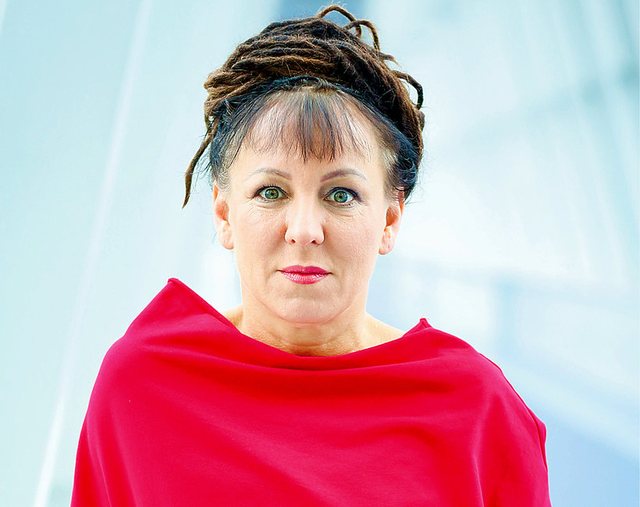
Olga Tokarczuk, in an interview a year and a half ago, said the world needed a stop. You said, "Something has to happen."
I had in mind what many of us felt: deep down we knew we were on a dead end and something was going to happen. But I think most people didn't even think that a pandemic would stop and paralyze the world. We also showed a lack of imagination, to realize that this mobile, global world full of people could not function so infinitely based on old principles.
Are you adapted to this closing situation, isolation?
The epidemic began when I was getting ready for a long journey to promote my books. I would have to travel for more than a month and return before Easter. I had even packed my bags when I found out I had to cancel the trip. In a way, I accepted this fact with ease. Lately my life has been accelerating, a lot of things were happening and I really felt tired. I'm used to working at home, so much so that my husband makes fun of me by saying that we live in an office with the possibility of sleeping. After the first week of vacation and reading, I started working. Alas, I must have faced this time in a different way, as in my childhood, where you could get bored sitting or having more time for everything. But apparently, I definitely have to do something.
Will this time we live in serve anything?
If I were to look for a metaphor for what we are experiencing now, I would say that we have undergone an exam. Something is testing us. I don't know if it's luck, the devil, nature, God or chance. It is testing us on different planes. He says, "I'm checking!" At the individual level we are discovering those needs that we have already forgotten: peace, detachment, reflection, and boredom. By staying locked up at home, we can carefully see ourselves and the limits we have. Where is our weak point, how much can we endure, where is our epicenter? To what extent are we truly living life? Am I really, or is it about certain behaviors and habits imposed? This time is a test for us and our loved ones. It can be discovered that, unlike praises and statements, family is by no means the most important and beautiful thing, that maybe staying with a person all day without interruption is unbearable, maybe children irritate us, maybe work is something necessary. , while in everyday life we hate it. Most likely we will be full of these bitter discoveries. But I’m sure this closure will be unbearable for people who are very sensitive or those with psychological problems.
It is now clear, not only from the Hungarian example, that pandemic may be the perfect pretext for government consolidation of power.
Such situations are tempting for satraps of all categories. But what happened in the 1930s cannot be overstated. That period is fascinating for many people for various reasons, it is also seen in the fashion world, in designs. However, it is a different matter, because other variables operate here, such as the climate crisis. The Internet has transformed us into a new society where people talk non-stop. Many things happen for the first time. Perhaps many people have forgotten that before the outbreak of pandemic, Greta Thunberg appealed to all world leaders, but also to ordinary people, to reduce consumption, not to fly so often by plane just to see Gioconda. Her words were seen with a sense of regret by entrepreneurial people and politicians. But suddenly it became clear that radical action was possible, and even necessary, such as the closure we are experiencing. I think we will become more radical and look for more radical solutions. Change is always possible, we are not forced to live in despair and helplessness.
In the article published by the Frankfurter Allgemeine Zeitung, you wrote that "new times are coming" and on the European Union that "at this difficult time it was seen how weak the idea of community is practically".
When I talk about the Union, first of all I have in mind the idea of community in this small peninsula called Europe. It is inhabited by different cultures, who speak different languages and have common and different histories. These ethnic groups formed independent states in the 19th century. But they still managed to come together, open the borders, allow people to meet and stay together. This is my Europe, I feel no less than Poland. Among the biggest disappointments of recent weeks is the closure of borders. The first reaction was against the community. A regression to the past and to the illusion of security. Within a day, the borders were restored. I wonder how this old national rule stays under the surface, and appears so easily. I fear a situation in which everything we have built over the years can crumble. I'm also afraid of xenophobia growing along with the virus.
When will the world we know return to normal? Will it succeed?
We need to redefine the word "normality." I fear that returning to what was before will not be possible. We will remember the world before the epidemic as a bygone era.
* Olga Tokarczuk is a Polish writer. In 2018 she won the Man Booker International Prize, while in 2019 she was awarded the Nobel Prize in Literature. The interview was conducted by Erjon Uka.


