


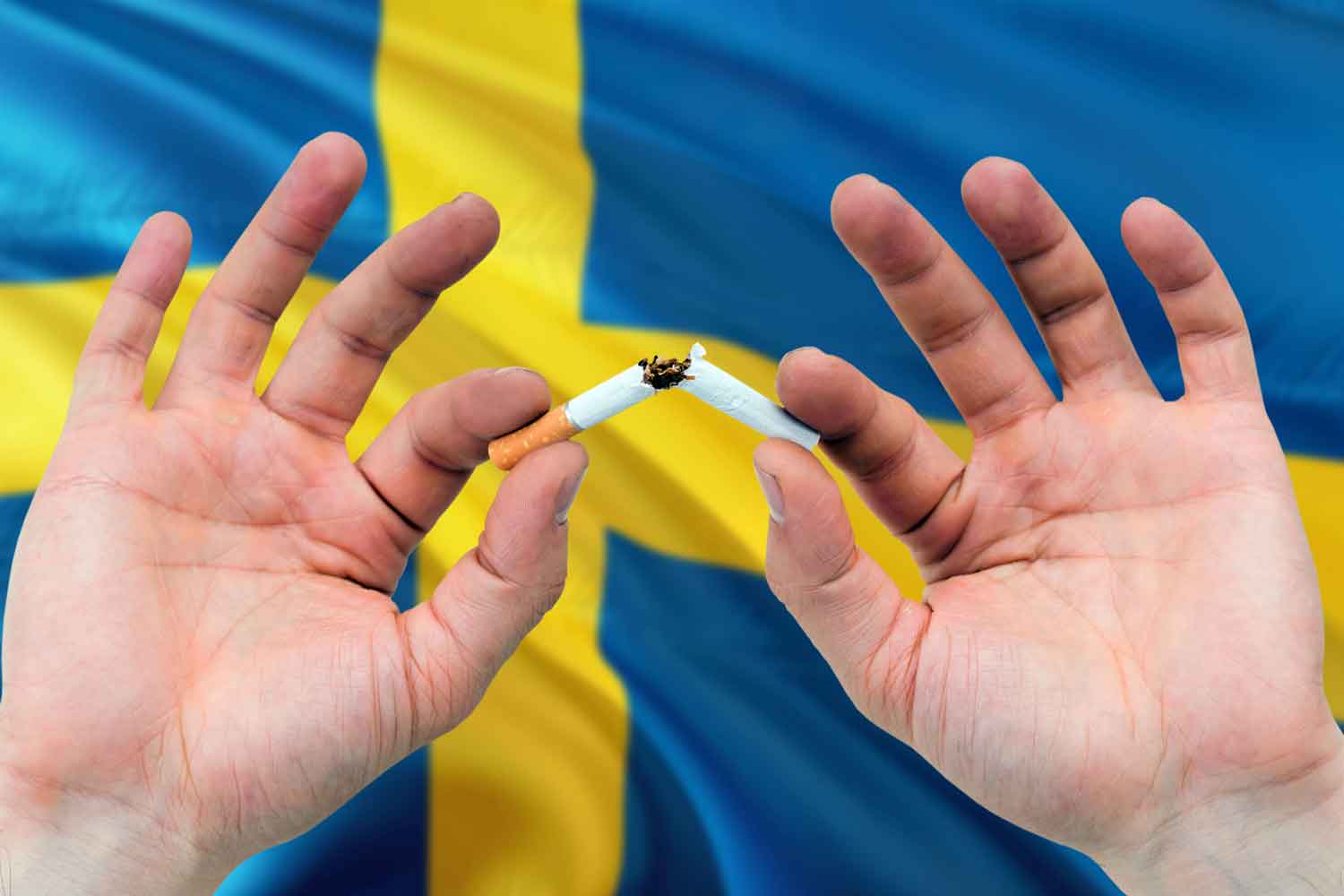
Sweden has become the first country in Europe to move closer to becoming a smoke-free society, according to the latest data published by the Swedish Council on Alcohol and Drug Information (CAN). The report shows that by 2025, less than 5% of the Swedish population will report smoking every day, a level widely considered to be the threshold for a smoke-free society.
According to the study, only 10% of Swedes aged 17–84 had smoked cigarettes in the last month, while the share of daily smokers has continued to decline significantly compared to the past two decades. The report highlights that the decline in smoking has been accompanied by an increase in the use of other nicotine-containing products, such as snus and electronic cigarettes.
The report's authors note that Sweden has pursued strong tobacco control policies for years, including taxation, marketing restrictions, health warnings and the expansion of smoke-free environments. According to the analysis, these measures have played an important role in the gradual decline in cigarette consumption.
However, the report also highlights another development: while smoking has declined, the use of other nicotine products has increased. In 2025, around 22% of the population had used snus in the last month, while 5% reported using e-cigarettes. In total, around 30% of Swedes had used at least one nicotine product in the last 30 days.
Public health experts continue to stress that nicotine-containing products are not without risk and should not be used by young people or by people who do not consume nicotine products. However, the Swedish experience is increasingly being studied at the European level as an example of how smoking rates can be sustainably reduced.
For Albania, where smoking prevalence remains among the highest in the region, the Swedish case offers an opportunity to reflect on the effectiveness of current policies and on ways to accelerate the reduction of cigarette consumption. Although the social and economic realities are different, the Swedish experience shows that change is possible when public policies, education and innovation develop in parallel.
The decline in smoking in Sweden did not happen overnight. It is the result of a multi-year process that has gradually transformed consumer behavior. Today, the country is considered one of the most prominent examples in Europe of reducing the consumption of traditional cigarettes and moving closer to the goal of a generation with fewer and fewer smokers.


