


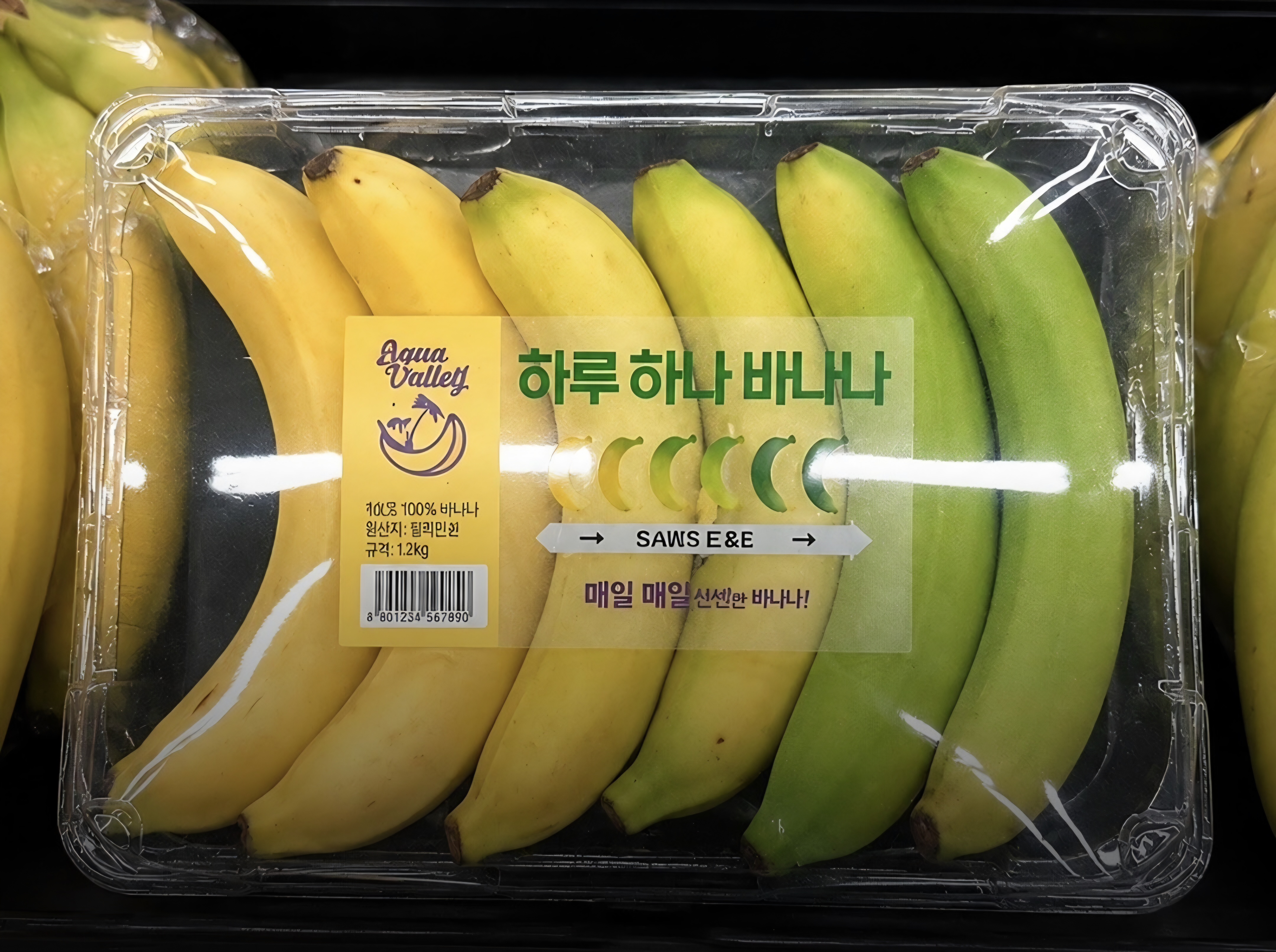
In South Korea, bananas are sold in packs of varying levels of ripeness so you can eat one every day.
“Haru Hana Banana” (meaning “A Banana a Day”) features purposefully selected bananas in various stages of ripeness, sorted from yellow ones, ready to eat immediately, to greener ones, which will ripen over the next few days.
South Korean supermarket chain E-Mart sells this pack of six bananas arranged according to their degree of ripeness: from a completely yellow banana, ready for immediate consumption, to a green banana that reaches its optimal ripeness at the end of the week.
The idea is simple: eat the ripest banana the day you buy the package and, each subsequent morning, the next banana in line will have reached perfect ripeness.
This solves a common problem. Bananas from the same bunch are picked at the same time and release ethylene gas, the hormone that promotes ripening, so they usually turn from green to brown almost instantly. As a result, many people end up with overripe bananas that they don't get to eat in time.
By separating bananas according to their degree of ripeness in the packaging, E-Mart extends the consumption period throughout the week.
First launched in 2018 and going viral again in 2026, this package has been widely praised as a smart and simple solution for reducing food waste, especially in South Korea, where single-person households are the most common type of household.
The main criticism is related to the additional use of plastic for a fruit that already has its own natural "packaging": the skin.


