

The air we breathe and the mind that is slipping away from us

2026-05-07 12:25:36
TiranaPost
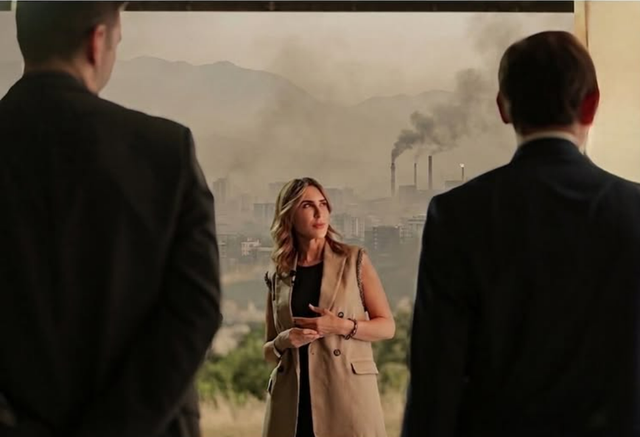
By Majlinda Bregu/ There is a special 24-hour sound in Tirana.
It is the sound of a city that howls to itself: horns and cars without mufflers at night, club or wedding music that "breaks" window panes, cement mixers and construction trucks that don't stop when the light goes out.
Last year, Co-PLAN monitors recorded what most of us already felt in our bodies.
At 78% of the measurement points in the capital, the daytime noise level exceeded the threshold of 55 decibels, the line beyond which, according to the World Health Organization, damage begins.
At most of the measurement points, nitrogen dioxide - a typical pollutant from cars, especially diesel ones - in some cases reached up to 5 times the standard.
That Tirana is one of the most polluted cities in Europe (the Numbeo pollution index places our capital at 87.5) is a well-known fact.
What is new is what the European Environment Agency (EEA) has recently published: facts linking exposures to noise and environmental pollution with depression, anxiety, worsening of psychotic symptoms and dementia.
A careful analysis, (as science should be), confirms a 12% increase in the risk of depression for every ten decibel increase in noise above the norm.
But the noise doesn't just come from the air.
Air saturated with fine particles of concrete and nitrogen dioxide, the two pollutants where Tirana consistently ranks first, is linked to the early onset of depression.
More clearly, the air that children breathe today increases the risk of developing depressive or schizophrenic symptoms in adulthood.
And it doesn't end there.
Fine particles in the air, so small that they enter the lungs and pass into the bloodstream, increase the risk of dementia.
In other words, in cities like Tirana, where construction dust, heavy machinery, and trucks transporting inert materials are present day and night, the risk of dementia is at least 14% higher than the European average.
Imagine parents walking with their children today. Both generations are mentally endangered by the pollution they inhale and the "lullabies" of noises at night.
For years and years, mental health has been seen as an illness linked to family heritage, dictatorship, emigration, transition trauma, and treatment deficits. Few psychiatrists, few beds, a lot of stigma, unregulated counseling and therapy services, and so on.
But science is raising the question again: Why so many increased cases of mental health problems?!
She says that a significant part of the depression that a young woman in Fushë-Krujë lives with, a part of the anxiety that a child in Fier carries without naming it, a mother who suddenly does not recognize her children in Tirana, do not have only family history as a cause.
Mental health is not a personal failure, nor a cultural weakness, as the old grammar of shame once insisted.
It is affected every day and in a measurable way, by decisions about traffic, urbanization, fuel, building permits, why not even by the payments under the table to not stop the hustle and bustle, the noise, the license and so on.
A country that funds a school psychologist while allowing a construction site twenty-four hours a day within two hundred meters of that school is not simply granting one more building permit.
It is making a decision for the health of its citizens.
If pollution is reduced on December 21, we are not only meeting a European environmental standard. According to the best available science, we are also reducing the risk of depression for the generation that will grow up on that road, as well as the risk of dementia for the generation that will age on it.
Yes, the air quality that is driving us crazy is also part of those European standards for which we have not yet begun to applaud and beat our chests as having been met, and we even easily ignore them, according to the principle that what does not deserve to be in the parade of achievements does not exist.
But every sleepless night, every breath of dust, every noise that comes in through the window, slowly sickens the mind, every day, much longer than a term lasts.
#EuropeanMentalHealthWeek


