

Social media has "died" and television has won
Pse e ardhmja është një e shkuar që e kemi parë tashmë

2025-11-11 12:35:18
TiranaPost
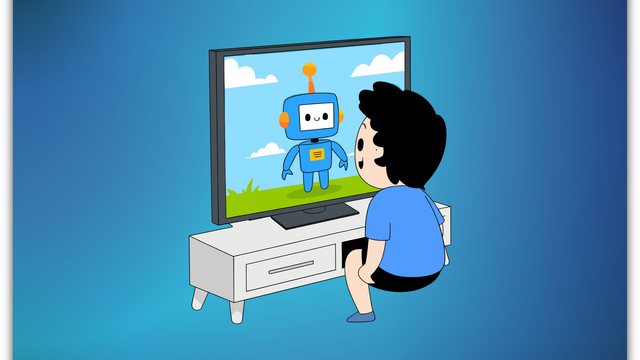
“Everything that is not yet television is becoming television.” This phrase by American journalist Derek Thompson sums up one of the greatest transformations of the digital age: the way every form of communication, from social networks to podcasts to artificial intelligence platforms, is increasingly copying the logic of television.
Spectacle. Fast pace. Passive consumption. The dominance of video over speech. Culture is once again turning to performance, and the screen is the new universal stage.
From social networks to personal televisions
When Meta admitted that only 7% of time on Instagram is spent watching content from friends, while 93% goes to videos of strangers selected by the algorithm, it became clear: Instagram is no longer a “social network.” It is a personalized broadcast, a global television channel tailored to each of us.
TikTok, YouTube, Facebook… they have all become the same thing: a screen that slides endlessly, hours of watching people we don't know, in an endless stream of videos. Social networks were born to connect us, but today they serve to fill the silence. And they are no longer communication. They are dopaminergic anesthesia, a constant caress for our nervous system that keeps us awake, but not conscious.
Even artificial intelligence will become television
Even artificial intelligence is not immune to this “gravity” of spectacle. Meta has launched Vibes, OpenAI has introduced Sora: endless streams of videos created by machines, authorless mini-films, absurd scenes that exist only to fill space and time. It is no longer man who creates. It is the machine that entertains.
Television as the "attractor" of all media
Derek Thompson uses a mathematical term: attractor. It is the point towards which any system tends to end, like a bead spinning in a bowl until it falls to the center.
In this sense, television is the magnet of all media: everything ends up in its own format and logic. Raymond Williams called this phenomenon “flow”: a continuity without beginning or end, where content rotates endlessly, without stopping or reflecting. When culture loses its ability to stop, only the flow remains. And the social media feed is the new holy river of this time.
But there is a fundamental problem: flow does not build, it consumes.
Who feeds on whom?
The word feed in English means food. To feed — to feed. But the question that needs to be asked is: Are we the ones who feed the feed, or is the feed the one that feeds us? With our time, with our data, with our attention. Sociologist Robert Putnam warned about this back in the 1990s: from 1965 to 1995, Americans gained six more hours of free time per week. And what did they do with it? They gave it to television.
They could have used them to learn, to love, to create, to share. But they used them to see. And today history is repeating itself.
Interactive solitude
We are more connected than ever before, but we are lonelier than ever. More opportunities to communicate, but fewer abilities to listen. More tools to create, but less desire to think. It is interactive loneliness: we are connected to everyone, but in sync with no one. And television, old and new, is amplifying everything.
His logic is simple: Don't explain, excite. Don't argue, surprise. Don't think, react.
And when everything becomes television, everything becomes spectacle. Politics becomes theater, science becomes storytelling, and information becomes performance. The more we adapt to this logic, the more we lose something voiceless: not just intelligence, but interiority. The ability to feel from within, not from without, to remain still. To be bored. In a world where everything becomes television, the real revolution is empty space, silence, slowing down.
The winner will not be the one who produces the most videos, but the one who still manages to create peace within the noise. Not the one who keeps their gaze glued to the screen, but the one who knows how to turn it inside themselves.
The world is no longer becoming ignorant. It is becoming televised. And in a televised world, those who still manage to think may become invisible to the algorithm, but indispensable to reality.
Originally published on bota.al


