

In a decade we will have a life without disease, but not a life without death

2026-04-24 17:12:51
TiranaPost
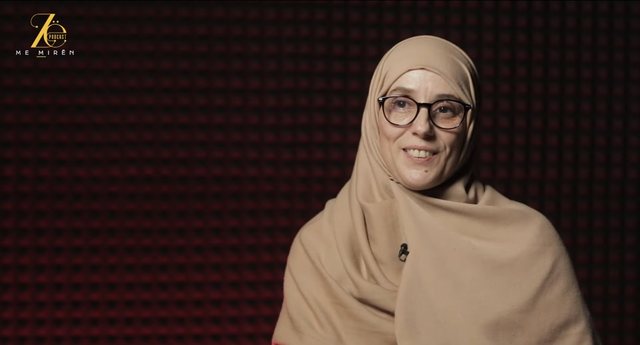
Rudina Tahiri, an Albanian scientist in London focused on cell therapies, comes for the first time with a different story for the Albanian audience on the ZëmeMirën Podcast, a combination of science, philosophy, and personal experience in the laboratory.
It raises one of humanity's oldest questions: why does the human body function in such perfect order?
According to Tahiri, the answer is not just biological.
"Life and death are stages," she says. "We come as a body that unites with the soul, and we leave when that connection is broken. But that doesn't mean it all ends there."
At the center of the discussion is DNA, the core of our biological information.
"The body decomposes, but the DNA does not disappear," she emphasizes, opening a debate on the limits of life and the possibility of continuity.
At this point, journalist Mira Kazhani poses the question that challenges the very essence of existence: can there be eternity? Can humans be recreated through DNA?
Tahiri's answer is straightforward, but not without nuance: "Technically, yes." However, she clarifies that biological re-creation is not equivalent to the restoration of the individual as a unique being.
“Human identity is not just the body. Therefore, even though science may go far, death remains inevitable.”
A key moment in her story is an experience in the laboratory several years ago, when she was faced with phenomena that she could not explain with scientific logic alone.
"That level of perfection made me think there's something beyond us," she says.
Despite this, Tahiri remains optimistic about the future: according to her, within a decade, developments in cell therapies could bring about a nearly disease-free life.
But one thing remains certain: not a life without death.
Watch the full episode


