


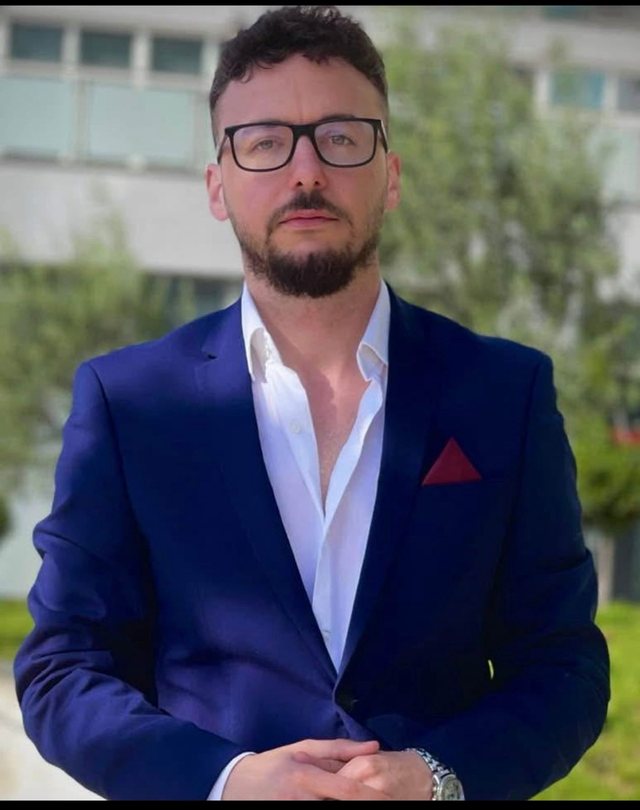
By Ermal Peçi/ I have never met Mira Kazhani. I don't even know her personally, but I have followed her through her podcasts, which I really like. I have decided that the books I read and that convey a human emotion, I will analyze them, because the experience must be written. However, before I started writing this editorial, an internal dilemma crossed my mind:
Does a man have the right to talk about a woman's experience?
Can a boy feel the silent weight of a battle taking place inside a body and a soul that does not belong to him?
These questions tormented me before I decided to sit down and write, but then I thought that what Mira Kazan has shared with the world is not the story of a sick breast, but of a heart that refuses to stop. And there, in the face of life and death, man or woman, we remain equally naked and equal.
In “Another Day,” Mira talks about cancer with a calmness that shocks you. Not to dramatize, but to understand. Not to cry, but to accept. And what you feel as you read is that this is not a book about the disease – it is a book about returning to oneself, about the relationship with fear, with the body, with time, and with God.
There is something deeply philosophical in the way she sees life: not as a succession of days, but as an opportunity to consciously live every other day that is given to us.
In her silence with her parents, in her decision not to burden them with her pain, Mira shows a deep form of love – one that does not demand attention, but protects others even when she herself is broken. There is more strength in this choice than in any noisy heroism.
That is why this book cannot be read simply as a medical testimony, but as a spiritual journey. It reminds you that the body is merely a temporary shelter, and that what keeps us alive is not just health, but also the meaning we give to life. In the end, what remains is not the fear of illness, but the calm of acceptance.
“Another Day” is a tender prayer for life, a silent testament of a woman who did not seek to inspire anyone, but ended up giving breath to many. Because when one faces pain with dignity, it is transformed into light and this light, through words, becomes a guide for others.
In this book, Mira doesn't talk about endings – she talks about beginnings. About every morning that dawns and after the darkest night. About every breath that comes out of life's wounds as proof of survival.
In the end, the reader feels that this is not just her story, but a mirror in which we can see ourselves. For we all have our own “cancer” – a fear, a loss, a weight that we carry silently. We all, in different ways, wait for “another day” to be reborn.


