


By Sinan Berisha/ "My story, seen from the end is a beautiful story, but seen from the beginning is a tragic story. You are scared to death when you hear that dangerous diagnosis...", said journalist Mira Kazhani who with "Another Day" - inaugurated on Friday night in Pristina - not only reveals her story, but the message of the power of a woman in the battle with illness or with life.
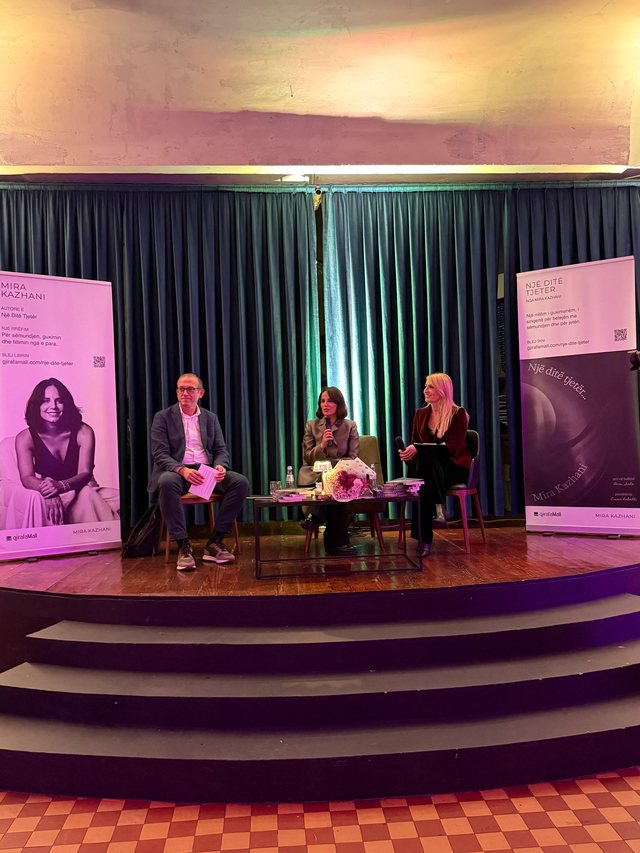
The “Ramiz Sadiku” cafeteria was filled beyond expectations. There was no need to set up rows of chairs, as guests stood up to the walls, to follow journalist and author Mira Kazhani closely. She came to Pristina with the book “Another Day”, which has already become one of the most widespread and talked about stories of this year in the Albanian space. Friday evening took on the appearance of a meeting beyond writings, where words and compassion become part of a human community.
The atmosphere was calm, but filled with emotion. In the panel consisting of journalist Vjosa Abazi, the author herself, and journalist and publicist Enver Robelli, journalist Abazi took the floor, considering what is often considered a weakness as a strength for Kazan.
"We are pleased to welcome to Pristina – to her second home – a woman who inspires us with her strength and sincerity. At a time when we often hide weakness as something to be ashamed of, Mira reminds us that strength begins right there, in acceptance, in the truth. Tonight she comes here, not to recount the stories of others, but to tell her own story," she said.
Journalist and publicist Robelli, who is also the publisher of the book through the publishing house "Dora D'Istria" based in Switzerland, began his speech with a warm and ironic tone, noting that many politicians would envy that gathering, for the fact that it is humane and sincere. He described this gathering as a celebration of courage and sincerity, for the fact that the author has ennobled a painful experience through journalism that reaches literary quality.
He shared some of the numbers that show the impact of Kazhani's story. In less than two months, nearly 10,000 readers have requested and purchased the book.
"Be clear that the majority are girls and women," he said, adding that this is not just about the topic, but about the fact that women read more. In his journalistic style, Robelli brought statistics from various European countries and reflected on the level of literacy in Kosovo, stating that only 22 percent of women and 13 percent of men read regularly.
"Out of ten men, nine have an almost hostile relationship with the book," he said, prompting laughter in the room.
Ai ka kujtuar edhe një pasazh nga britaniku John Hodgson, që në vitet ’80 shkruante se nëpër fshatra të Kosovës “historia këndohej më shumë se sa shkruhej”, dhe se kishte familje që e kishin marrë leximin si shenjë çmendurie.
“Kësaj shoqërie urgjentisht i duhen sa më shumë djem dhe vajza si ai djali ‘i çmendur’ i Smajlit”, ka thënë Robelli, duke e kthyer këtë histori në metaforë për mungesën e leximit dhe nevojën për dije. Më pas ka folur për forcën e humorit si mënyrë për ta bërë të durueshme atë që është e pamëshirshme.
“Ndoshta nuk është rastësi që fjalën tumor dhe humor i dallon vetëm një shkronjë. Nuk po them që sëmundja duhet të shpërfillet, assesi, por me humor e vetëbesim çdo sfidë shëndetësore kalohet më lehtë”, ka thënë ai, duke e lidhur kështu motivin e përballjes me sëmundjen me fuqinë e të qeshurit e të vetëbesimit.
Në pjesën e dytë të fjalimit të tij, Robelli është ndalur te përvoja e botimit të këtij libri si shembull bashkëpunimi kulturor përtej kufijve.
“Përvoja e botimit të këtij libri më ka treguar se, ndonëse si shqiptarë jemi të shpërndarë nëpër botë, kur kemi vullnet të mirë, mund të bëjmë edhe vepra të mira”, ka thënë ai duke treguar se promovimi i radhës i këtij libri do të jetë në fund të nëntorit në Zürich, në atë që e ka quajtur “kryeqytetin jozyrtar të Kosovës”.
E ka kthyer vëmendjen te historia e Menzës “Ramiz Sadiku”, duke e përmendur si një hapësirë ku dikur janë ushqyer punëtorët, por edhe ku janë dhënë shfaqje e janë recituar poezi.
“Njeriu nuk jeton vetëm nga ushqimi. Jeton edhe nga kultura. Andaj këtu gjendet edhe një skenë e vogël, ku punëtorët kanë dhënë shfaqje, kanë recituar poezi, ndoshta në vitin 1980 kanë folur edhe për botimin e kompletit të veprave të Ismail Kadaresë nga ‘Rilindja’, fabrika më e madhe e kulturës e gjithë historisë së Kosovës”, ka thënë ai duke e krahasuar këtë mbrëmje me të dikurshmet kur botoheshin librat e Lasgush Poradecit apo të Fatos Kongolit.
Pas fjalës së Robellit, në një atmosferë të butë e përplot duartrokitje, Mira Kazhani është ndalur për t’u rrëfyer. Në zërin e saj është dëgjuar qetësia e një përvoje që tashmë ka marrë formë të re, të shndërruar në mendim e reflektim. Ka folur për përvojën e saj në bisedat dhe njohjet me kosovarët.
“E vërteta është që ne nuk e njohim njëri-tjetrin, sepse njihemi vetëm nga muzika, nga artistët, nga klubet dhe nga plazhi dhe nga Rruga e Kombit dhe nga bregdeti, nuk mjafton kjo, duhet komunikim. Falë këtij podkasti dhe falë këtyre pesë viteve, unë jam në një fazë tjetër me Kosovën, me Prishtinën. Unë kam takuar njerëz të jashtëzakonshëm, por nuk i kam takuar të gjithë falë gazetarisë sime, por falë grave”, ka theksuar ajo.
Ka folur për forcën e grave si mbështetje e saj më e madhe, si në podcast, ashtu edhe në këtë udhëtim të fundit përmes letërsisë.
"Women not only read, but women have been my strength in the podcast, they have helped me communicate with their husbands," she said, turning the hall into a mix of laughter and applause.
Kazhani also spoke about how her story was received by readers in Kosovo.
"The book has been read and posted by many people in Kosovo who love my journalism, my podcast, or my book, and people who have been touched by my story. I don't mind at all that people feel a kind of compassion, I would have the same compassion for anyone going through a battle with illness or life," the author said.
In a calm and narrative tone, she also shared her first feelings after being diagnosed.
"My story, seen from the end is a beautiful story, but seen from the beginning is a tragic story. You are scared to death when you hear that dangerous diagnosis. Initially, with a sense of guilt, with a sense of shame, I had the feeling that my life was a mistake, somewhere I could have been wrong too. I felt part of an injustice, part of an infidelity, but this was only in the first weeks," she said, adding that mental strength is just as important as physical strength.
Her story took on an intimate dimension when she recalled her hesitation to tell her family and the moment of relief after opening up.
After the discussions and speeches concluded, Kazan stopped to meet the attendees up close, sign autographs on the pages of her book, and talk to the people who have helped her throughout that period.
Lindita Sejdiu, a professor and two-time breast cancer survivor, spoke with emotion about the closeness she felt to the book and the author, confessing that she has not yet been able to read the entire book.
"I am very happy to have met Mira. Just like her, I have experienced something even worse. I continue to think like Mira, I continue to not stop working and I continue to show others that this is the only way to live. Only with positivity can such things be overcome, good luck to Mira! I have only read the first and last chapters, the epilogue. I can't go on, I believe I need a calmer emotional period to start," she told KOHĪN.
It was highlighted that the publishing house "Dora D'Istria" has decided to leave the proceeds from the sale of the book to the author. The evening ended with long applause, with people coming forward to hug the author and give her the book for an autograph. As she herself said, "her story, seen from the end, is beautiful". And on Friday, that beauty was shared with everyone.


