

A Night with Tefta: The Documentary That Came Off the Screen and Became a Reality
Si Balina Bodinaku ringjalli një ikonë shqiptare përmes një forme të re skenike

2025-12-08 19:17:24
TiranaPost
By Albatros Rexhaj
The evening in Pristina was cold, with a light rain that felt like it was coming down on your neck and suggesting you head back home to the warmth. But some shows require a kind of small meteorological sacrifice - a gesture of loyalty to the art. And that night, the sacrifice was completely worth it.
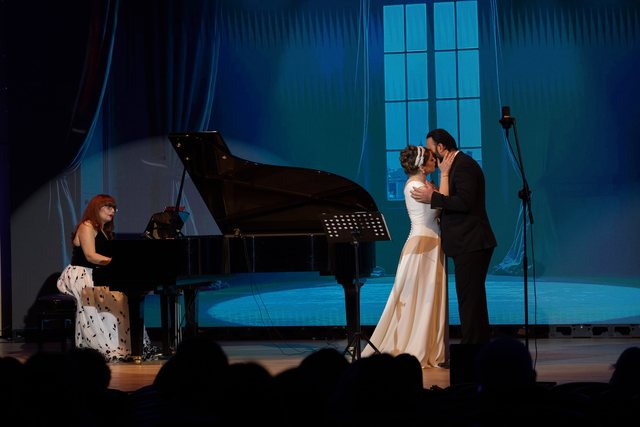
In the New Amphitheater of the Central University Library, where the howling of the wind crashed against the windows, Balina Bodinaku brought a format that resembles almost nothing known on the Albanian stage. She calls it a “stage podcast”. I would call it something else: a documentary shifted from the screen to the body, to the physical presence of the audience. A hybrid genre that has not yet decided on its final name - and this is precisely what makes it alive.
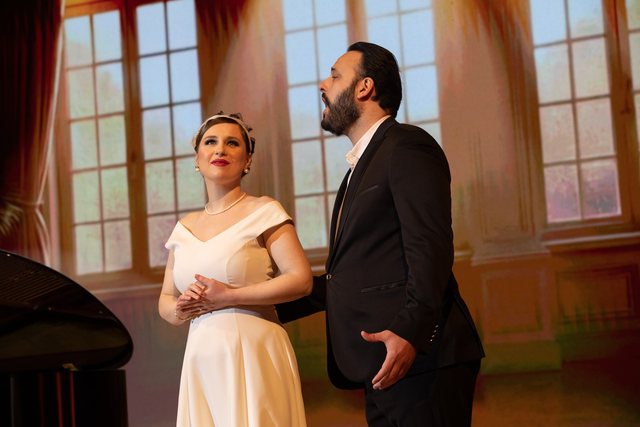
The play is a tribute to Tefta Tashko Koço, the voice that, more than any other, gave Albania an urban, civilized sound, with an elegance that has never lost its brilliance. But Bodinaku does not offer us Tefta through the usual cinematic distance. She does not share the screen with us. The narrator is there, a present figure, who invites us into the story not with grand gestures, but with a measured sensitivity, as if she gently opens an interior door and asks us to enter in silence.
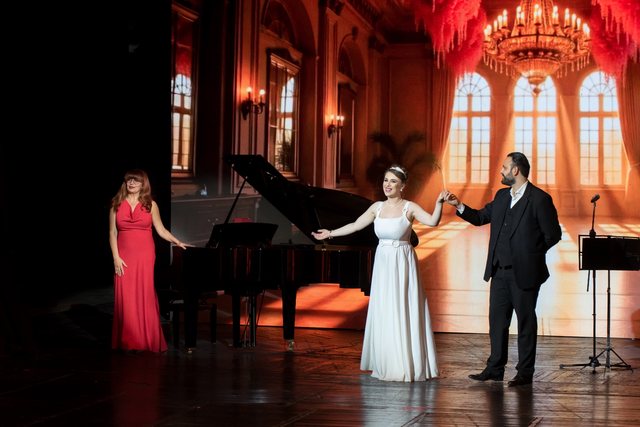
The format works like an aesthetic pendulum: on the one hand, the LIVE interpretation of theatrical points - played with a calmness that does not require immediate applause; on the other, the film passages that are projected onto the stage, adding the dimension of time and document to the narrative. This alternation creates its own rhythm: a guided breathing, where each part gives meaning to the other. Instead of linearity, you are faced with a recreation of memory that respects the fragment, the interruption, the intimate turn.
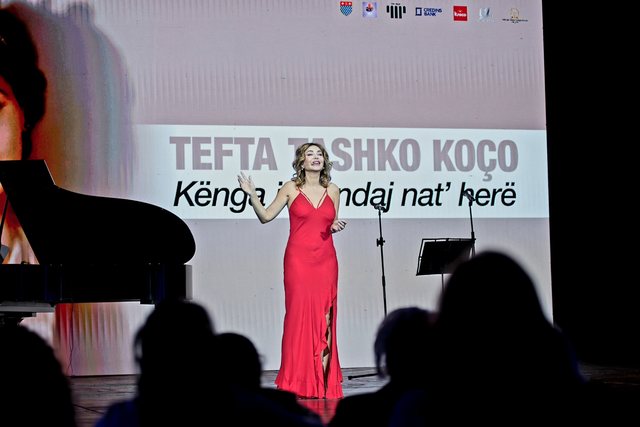
For a moment - and these moments are rare - art manages to simulate what is usually experienced only in a museum or library: the presence of the past. Bodinaku's performance brings Tefta Tashko Koçon not as a symbol, but as a man who has lived, loved, studied, struggled with the time limits that life had set for him. The document becomes emotion, and emotion returns to document.
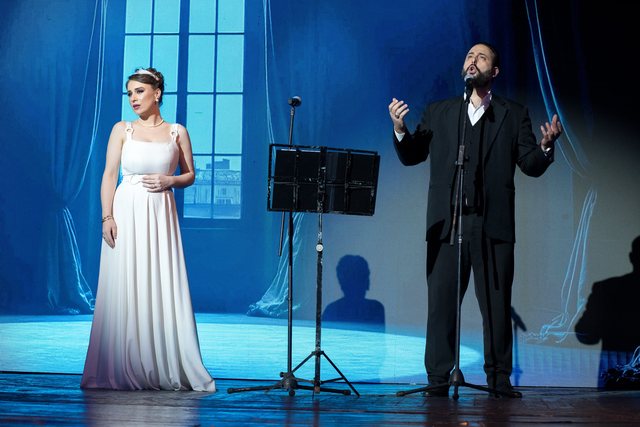
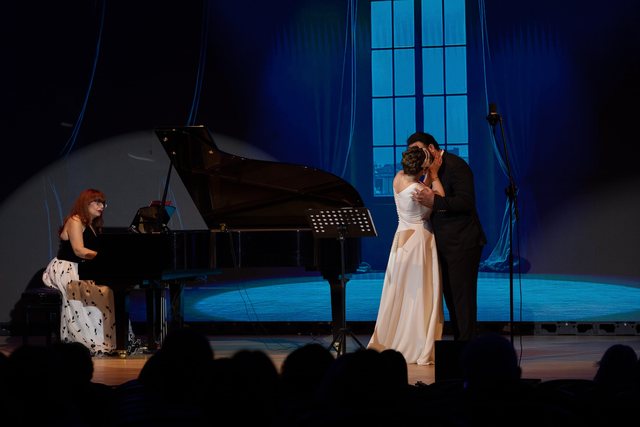
The finale is one of those scenes that doesn't need to be explained, because it does the job itself: Tefta's final presence on stage, that soft, quiet exit, filled with a light you can't find in projectors. It's the moment when art doesn't just tell the story of an artist, but tries to remind you of something about your life - about your short time, about how you fill it.
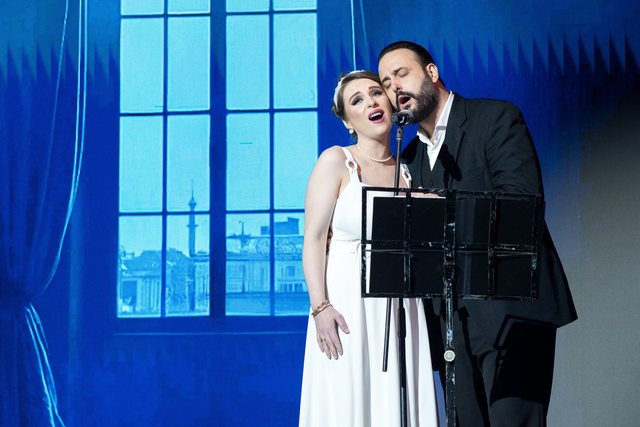
In a small cultural market, where new forms are often considered unnecessary or too experimental, BalinaBodinaku's "stage podcast" comes as a discovery that is both bold and subtle. It adds a missing dimension to the Albanian scene: the idea that documentary can be alive, that memory can sit next to you in a chair, that historical narrative can have breath.
And as I went outside, under the rain of a Prishtina that never ceases to be a little melancholic, it seemed to me that the evening had acquired a special gravity. How little it takes to make art unforgettable. Maybe just a voice like Tefta's. Maybe just someone who dares to recreate it with a new language. Maybe just a cold night is worth it.


