

US is "engaging more strongly" in the Balkans, while sanctions on Dodik may return

2026-01-16 19:37:30
TiranaPost
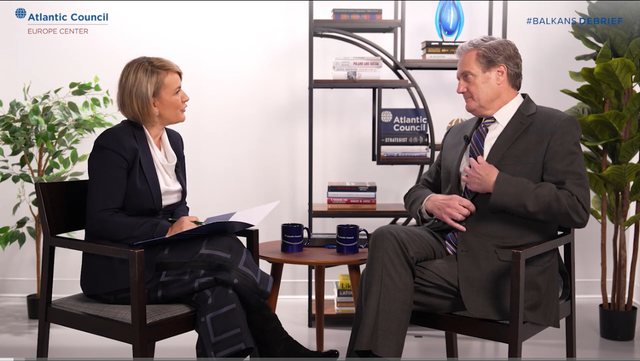
Washington is not backing down from the Western Balkans, and sanctions against Bosnian Serb leader Milorad Dodik could be reinstated if his secessionist rhetoric continues. That was the clear message that emerged from an interview by journalist Ilva Tare for the Atlantic Council’s #BalkansDebrief with Republican US Congressman Mike Turner, who says the United States is moving from a “passive engagement” to a more active role in the region.
Congressman Turner said the new U.S. National Security Strategy and the Western Balkans Democracy and Prosperity Act, passed through the NDAA, reflect a stronger commitment to stability in Southeast Europe. The law gives the administration a 90-day deadline to take action against individuals who undermine peace agreements like the Dayton Accords, a deadline that is being closely followed across the region.
“Washington is getting more engaged,” Turner said, arguing that the US now aims to address unresolved tensions before they escalate into conflict, rather than managing crises after they erupt.
Albania: Strong US security partner, despite corruption concerns
As Albania rapidly advances in its European Union membership process and prepares to host the NATO Summit in 2027, questions remain about how Washington views Tirana's role in the security field, amid ongoing concerns about organized crime and corruption.
Asked about US-Albania cooperation, US Congressman Mike Turner gave a clear and positive assessment. “Very good, a very good NATO partner,” he said, describing the security relationship between the two countries.
Asked whether corruption and rule of law challenges are undermining Albania’s security architecture, Turner acknowledged the broader regional context but maintained confidence in the direction Tirana is taking. “All countries in the Balkan region certainly have issues to address,” he noted. “But I think they are addressing these issues and they are very good partners.”
Regarding the question of how much influence Washington has in defending judicial reform and institutional independence in Albania, Turner emphasized the collective role of the international community. “The international community is a partner in building democratic institutions,” he said, adding that Albania’s path toward the EU and NATO strengthens reforms not only at the national level, but across the region.
Dayton at 30 years: Peace, but also deadlock
As Bosnia and Herzegovina marks 30 years since Dayton ended the war, Turner acknowledged that while peace has been preserved, it has been accompanied by political deadlock. He said the region now faces a moment of transition, which will require renewed international commitment and, potentially, a new framework, often called “Dayton 2,” to move beyond a system built to stop a war, not govern a state.
Regarding the controversial decision to lift US sanctions on Dodik last October, Turner said the move was tied to specific concessions in Republika Srpska, but warned that the situation remains under review. If destabilizing behavior continues, he said, sanctions remain a tool that Washington is prepared to use again.
Without ambassadors, but still active
Despite the lack of Senate-confirmed US ambassadors in the six Western Balkan countries, Turner dismissed claims of US inaction. He said US embassies are perceived locally as active and influential.
Kosovo–Serbia: The US role remains central
Turner also addressed the stalled normalization dialogue between Serbia and Kosovo, acknowledging disappointment at the lack of progress and unfulfilled expectations from the EU-led talks. He said renewed engagement by regional leaders is essential, but stressed that the US remains engaged and ready to play a decisive role if the process stalls.
Regarding the Association of Serb-Majority Municipalities (AKS), Turner was adamant: it remains an agreed condition, not an imposed requirement. “Kosovo itself has committed to it,” he said, rejecting claims that the issue is no longer binding.
A region still a strategic test
From opposing Russian influence to supporting EU and NATO integration, Turner portrayed the Western Balkans as a strategic priority, not a geopolitical afterthought. His message to the region’s youth was straightforward: the future will not come from outside. “You are the change,” he said.
For Washington, the message is equally clear: The Balkans are back on the agenda and are being closely monitored.


