


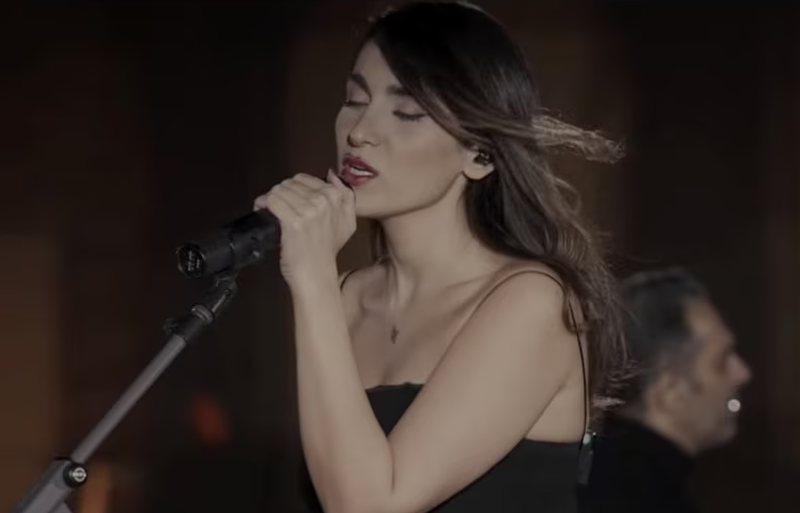
Iranian singer Parastoo Ahmadi and eight members of her production team, including musicians, have been sentenced to 74 lashes as a result of a concert broadcast live on her YouTube channel in 2024.
According to court documents, the Qom Provincial Criminal Court also imposed a two-year ban on traveling outside Iran and a two-year ban on engaging in artistic activity. The artists were found guilty of "violating public morals" by producing and publishing online what authorities described as "vulgar and immoral content."
Although Iranian judicial authorities have not yet made the decision public, human rights organizations and lawyers who have reviewed the documents say the case is part of a broader campaign by the regime to suppress artists who challenge cultural restrictions and openly express dissent.
In December 2024, Ahmadi, 29, performed the patriotic song "Az Khoone Javanane Vatan" ("From the Blood of the Youth of the Homeland") without a hijab in a live-streamed concert, which went viral on social media.
Shortly after the video was released, she and some of the musicians were temporarily detained by authorities, only to be released later. Later, an official lawsuit was filed against them for releasing the video, which has so far amassed millions of views on YouTube.
Bahar Ghandehari, advocacy director at the US-based Center for Human Rights in Iran, stated: "The sentencing of Parastoo Ahmadi to 74 lashes simply for singing and appearing without a hijab is further evidence that the human rights situation in Iran remains unchanged, despite the authorities' propaganda efforts to improve their image."
The decision has caused great concern among Iranian artists, who see it as a signal of escalating cultural repression.
Iranian-British actress Nazanin Boniadi reacted by saying: "The sentencing of Parastoo Ahmadi to flogging simply for singing in public without a hijab is a stark reminder that the Islamic Republic's repressive machinery continues to operate unabated."
She added that tolerating a regime that punishes women for their voices and kills citizens who demand their rights only encourages it to continue repressive policies.
Even Iranian actress Setareh Maleki, who lives in exile after starring in the Oscar-nominated film "The Seed of the Sacred Fig," said Ahmadi's performance had a deep emotional impact on her.
"When I saw the video of Parastoo Ahmadi's concert, it brought back my spirit of resistance. For days I watched it over and over again and felt immense pride for her. Even though she knew what consequences she would face, she did not give up her right to live, to sing, and to be heard."
Maleki emphasized that Iranian women never stop fighting against tyranny and that, for an artist who rejects censorship within Iran, everyday life itself is an act of resistance.
"We have come a long way, but we still have a lot to do. Every artist who speaks up restores hope and becomes a guiding light for all of us," she concluded.


