


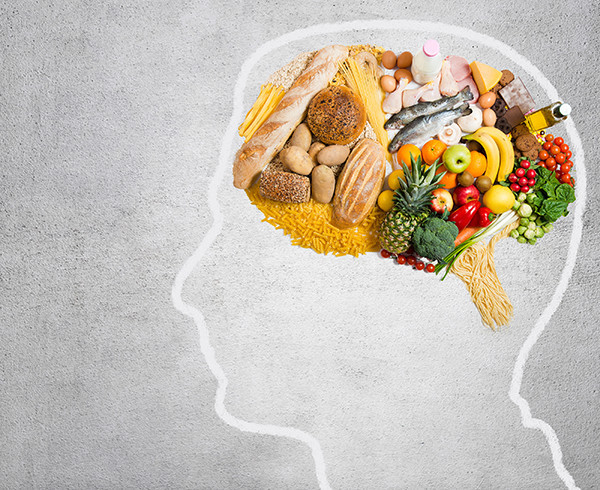
Is the amount of time you think about food normal?
Hunger, like anxiety or physical pain, is a private experience. You can see what others are eating, but not how food behaves in their minds, whether it comes as a passing thought or as something that must be managed throughout the day. This inner world is invisible, so there is no clear point of comparison and no way to know if your experience is worse than others’.
Medicine and scientific research have struggled with this invisibility. It is not a lack of interest, but a problem of measurement: what is not seen is harder to study, and what is harder to study is often not treated. A woman who constantly thinks about food looks the same as another who does not experience it. She functions normally, and what goes on inside her mind remains hers alone. Without a point of comparison, she accepts it as something normal and never questions it.
The variable that no one thought to measure
Research shows how little we've studied this phenomenon. A 2023 study identified 11 different dimensions of hunger. Some are physical, like the feeling of an empty stomach. Others are emotional and mental, like irritability or difficulty concentrating. The latter are important because they're often not recognized as hunger. They just look like a bad day or a lack of focus. People vary greatly in how they experience these dimensions, meaning that two people can be equally hungry but experience it completely differently.
This invisibility becomes even stronger when food restriction comes into play. Restriction theory suggests that trying to eat less paradoxically creates a greater preoccupation with food and reduces control over eating. So the more you try to think less about food, the more you think about it. And because it is an invisible experience, the person experiencing it does not know whether it is a personal problem or a biological consequence of prolonged restriction.
So why can't you stop thinking about food?
Hunger is not a simple signal , but has many dimensions (not just an empty stomach, but also irritability, lack of concentration, constant thoughts about food).
The brain processes hunger differently in each person , so some have it "noisier" than others.
Food restriction (dieting, stopping) often increases food obsession because the brain becomes more sensitive to food cues.
Some people do not have a "normal basis" for comparison , so they think this condition is normal and only theirs.
In some cases, biological mechanisms (such as hunger and satiety hormones) can keep the mind focused on food more than usual.


