

Lobotomy, when the brain was operated on to cure mental health problems

2026-02-24 15:05:02
TiranaPost
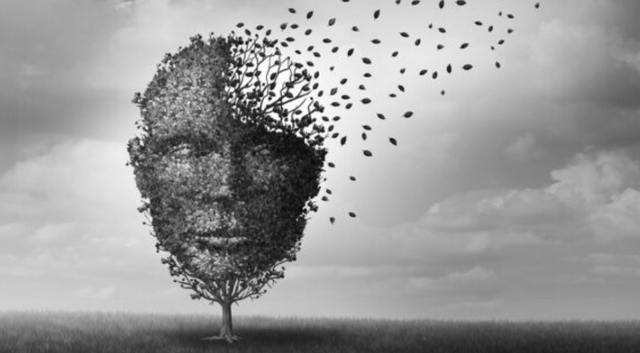
Psychiatry has always been a complex chapter in the history of medicine. Ever since man realized that the mind can also become ill, the methods for treating mental disorders have not always been ethical. On the contrary, until recent decades, history is filled with practices that are today considered brutal and inhumane.
One of them is lobotomy, an operation that for decades was thought to cure several mental disorders such as depression, bipolar disorder, schizophrenia, and personality disorders.
The history of a highly controversial practice
The term "lobotomy" appeared several decades after the birth of this practice, which was used in some countries until the 1980s. Its history spans about a century and was called by various names until the 1950s, when it took on the name by which it is known today.
It is a highly controversial, not to mention barbaric, practice that only disappeared with the introduction of psychiatric medications, which replaced surgical intervention in the treatment of mental disorders.
How did the idea come about?
The initial idea dates back to the late 19th century, when physiologist Friedrich Golz noticed that his dogs, after accidentally damaging their temporal lobes, became less aggressive. This led him to believe that intervening in the areas of the brain associated with emotions could cure some psychiatric pathologies.
The first operation on a human was performed in 1895 by Gottlieb Burkhardt, director of a psychiatric hospital in Switzerland. He operated on six patients: two of them died a few days later (one by suicide), while two others did not experience the expected improvements. The scientific community severely criticized this method, however, such interventions continued until the 1930s. This primitive technique was called leucotomy.
The return of the lobotomy
It was not until 1936 that lobotomy was brought back into more “controlled” use by Antonio Egas Moniz of the University of Lisbon, who later won the Nobel Prize for Medicine (1949). He used drilling into the skull at several points and destroying the white matter of the frontal lobes with alcohol.
His method calmed aggressive patients and quickly spread around the world. Many psychiatrists followed this practice, considering it an effective solution.
Freeman and mass dissemination
The person who widely disseminated the technique until the 1980s was Walter Freeman. Together with James W. Watts, he developed the transorbital lobotomy, a faster method that did not require opening the skull. Freeman used an instrument similar to an ice pick, inserted into the brain through the tear ducts of the eye. The procedure lasted only a few minutes and was often performed without anesthesia.
Within a decade, annual operations grew from about 500 to 5,000. Freeman traveled the United States performing thousands of procedures, even in front of reporters. Among the patients was 12-year-old Howard Dully, who thankfully improved over the years.
How did it work?
Lobotomy consisted of surgically cutting a portion of the neural connections in the frontal cortex of the brain, an area involved in emotions, motivation, risk assessment, and social behavior. For this reason, it was considered a source of mental disorders.
Early methods involved opening the skull, while Freeman's technique used entry through the tear duct. Although faster, it remained very dangerous.
Devastating consequences
Today, lobotomy is considered one of the darkest pages of medicine. Many patients died shortly after the operation, while the real benefits were very few.
The side effects were severe: loss of emotion, decreased spontaneity, lack of awareness and self-control, and epileptic seizures. Many patients lost initiative and cognitive abilities, showing marked mental regression.
Known cases
Among the tens of thousands of interventions, some cases remained famous:
• Rosemary Kennedy – the sister of US President John F. Kennedy underwent a lobotomy at the age of 23 and was left with serious consequences for the rest of her life.
• Evita Perón – according to some later discoveries, she may have undergone a lobotomy shortly before her death in 1952.
• Josef Hassid – a talented Polish violinist who died after complications from such an intervention.
• Frances Farmer – a Hollywood actress who was suspected of having undergone a lobotomy while in a psychiatric hospital.
• Soldier Tritz – a World War II veteran who suffered serious consequences after the procedure.


