

Aflatoxin in milk. Expert Zusi: this time the industry acted before the institutions

2026-02-02 15:05:31
TiranaPost
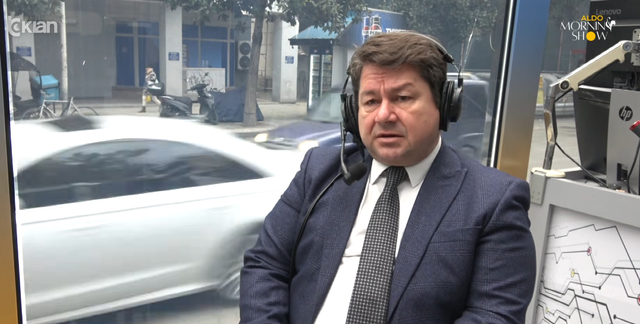
Following the discussions opened by the ban on the production of milk that resulted from laboratory tests with aflatoxin, on several farms in Lushnja, another food safety expert has explained the health risks that the distribution of this milk on the market would cause, thus evaluating the preventive decision.
Invited to the "Aldo Morning Show", Arben Zusi, who previously held the position of former Deputy Minister of Agriculture, explained that unlike previous episodes where violations were mainly discovered by the authorities, this time it was the milk processing industry, the Lufra company, that erected the necessary and vital barrier, blocking the raw material suspected
of contamination, an action in accordance with the law.
"If it were to release that product on the market, the company would be violating the law, would become a target for criticism, and would risk bankruptcy. We recall the case when in 2012 a company went bankrupt precisely because it did not take this measure. Citizens should be grateful for this decision. All over the world, it has been the industries that have set the standard," he emphasizes.
Referring to the 2008 Law "On Food", as amended, which states that when food is considered unsafe, when it is harmful to human health, when it contains microorganisms and parasites above the normal value, determined by approved standards and, as such, is not allowed to be placed on the market or used for processing, Zusi emphasizes that Lufra's decision was not only morally, but also legally justified.
Zusi then shifted the focus of the discussion to the chain of protocols, to the role of institutions.
According to him, if the industry has done its duty by blocking the contaminated milk, then the economic damage to farmers should be compensated 100% by the state.
"The responsibility to solve this problem lies with the institutions. Farmers are not intentional in their activities, they only know what they do, the institutions that are tasked with this work must find a solution. Farmers have no schooling, are neither veterinarians nor do they understand technical processes, so they need assistance. There are tens of millions of euros that go to support counseling. There is a service in the Ministry of Agriculture called the "
Counseling Service"; "Veterinary Service"; "AKU Service" that has this task. If milk with aflatoxin has been banned by the industry to which we are grateful for protecting us, the economic damage that has been done to those farmers will have to be compensated 100% by the public institutions that have allowed this product, this contaminated raw material to enter the country. The burden of this
situation should not be borne by the farmers." - he argues.
Aflatoxin is not just an Albanian phenomenon. According to Zusi, such cases are regularly reported in Germany, Italy, France and the USA.
"In the 80s this was very problematic in Europe, but the industry reacted and the system improved. It is not about total elimination of the risk, but about immediate detection. There are dozens and hundreds of cases in Europe and America, there are reports every month of aflatoxin cases. What is important in these countries is that it is detected immediately and the farmer has direct contact with the institutions," he says.
The case of Lushnja, according to him, highlights three urgent needs: stronger controls on the import of animal feed; real support for farmers through technical advice and monitoring, and a compensation mechanism when farmers are harmed.


