


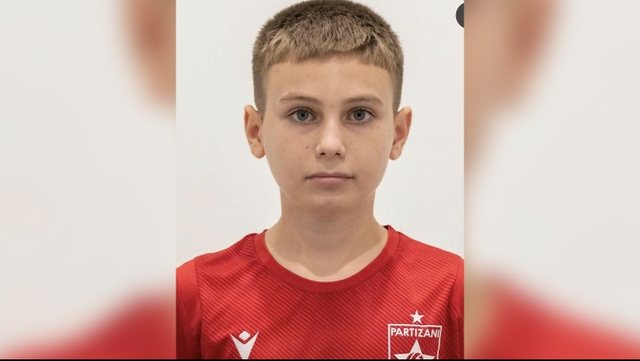
Today, a horrific video was shared almost everywhere in the Albanian media: the moment when a 16-year-old, Martin Cani, runs with his hand on his heart after being stabbed by his peer. The incident took place last October. The images are shocking. They are accompanied by the caption: "Martin holding his hand on his heart."
Unquestionably, it's good that the video exists. It's proof. It's evidence that refutes any attempt to evade responsibility. It's a fact that helps justice do its job.
But the question being asked today is: why did the video have to be shared?
What value does it have for the public to see a boy dying in the street? What is the purpose of broadcasting these images; justice or clicks? Informing or exploiting pain?
In Austria, just a few hours ago, a massacre took place in a school. The victims were children, teenagers. No one dared to publish videos from inside or outside the school. Not because they didn't have cameras. They did. But because they also had limits. They also had ethics. They also had mercy for those who are alive and for those who are no longer there.
People don't have to be killed a second time. Martin Can's family doesn't have to see the last moment of their son's life turned into news. They don't have to face this horror as a public spectacle. They don't have to listen to his heart stop beating...with subtitles.


