

What should we call this - the uncertainty that makes you feel alive in the book 'Misunderstanding'

2025-09-23 19:36:29
Manjola Lloja Bushati
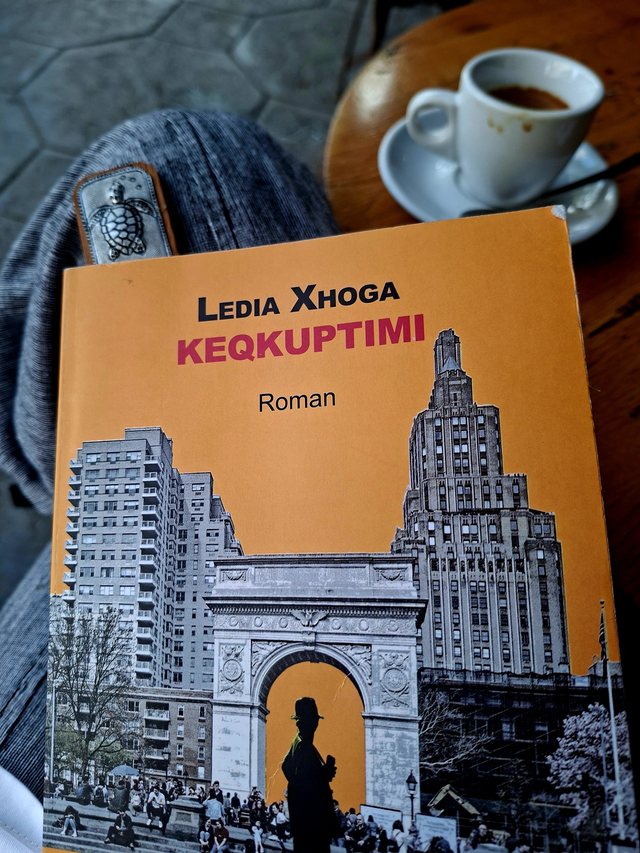
By Manjola Lloja Bushati/ "What name do you give to this?" There is an expression in Albanian when something is unclear, unexpected, ambiguous, on the verge of being misunderstood.
Like the main character of Ledia Xhoga's seminal book, "Misunderstanding." The only character who struggles page after page, trying to find his "name."
In front of her, every other character seems to have clearer waves to overcome, not necessarily calmer, but clearer nonetheless.
While the translator who connects different realities, different experiences, who often forgives others more easily than herself, who lives through doubt... well, she will need a little more time, perhaps even self-control, to rise above the waves.
Who knows, maybe to dive in again.
We may not have the culture of contemporary American literature, and many of our impressions are shaped by Hollywood cinema. Don't expect anything like that from this book. The author, who grew up and was educated in the US, brings none of the spirit, show, or sparkle that we expect when faced with an American production.
Much less predictability. The "misunderstanding" leaves you in "embarrassment" until the last page. When you finish reading it, another embarrassment begins.
Quite naturally, the events and characters also come to Albania. This is one of those cases when, as a reader, I fear I will be disappointed. But no, this is not that case. Days from Tirana to Berat are pages that make me feel like a citizen of the world, the description there helps the story, it is not an aim in itself, an "obligation" to include the homeland in the first work I am writing.
There is a thread of uncertainty and doubt throughout the book. This creates a kind of tension, and even impatience to read the next chapter.
And after every page, you realize that uncertainty is so human, and you no longer feel alone...you realize that someone's story on the other side of the world could easily be yours, their uncertainty, your doubt, their fear, your worry.
What should the (desert) man do?
To think about the other, to be pushed for him? Or to remain closed in his own fate?
Is it wrong to be alone, should you reach out to others?
Is my good also that of others?
Is it good to be alone, is it wrong to let your mind wander?
Where does the space of another begin, who sets the boundaries? Does time help us, or does space hinder us?
Can we have each other so close, as in an all-inclusive relationship?
Should we close our eyes, should we say every thought, do we need filters, does secrecy protect us?
Should we fear our imagination?
Should we ask for help?
Does everyone have their own worries? Does worry resemble worry?
I could go on and on about the questions this book raises. I don't intend to say whether you'll find the answers you're looking for, or even any answers at all. And the competition doesn't matter at this point. Of course, much more attention should be paid to the author's selection as a contender for the "Booker Prize 2025"..but the book..the book has made its own history, in my opinion.
For example, "Misunderstanding" reminds me of my high school days when I devoured the books of Kafka, Camus, Sartre. The time when I chose to study society, over art and journalism, which I had thought for years would be my choice. And believe me, a confirmation that I had made the right choice was that it was very nice to be given a book by an Albanian author.
I would like to read the book, and then talk to someone else who has read it. And if you can't find someone who has read it, give it to them. And wait. Wait for them to read it. Then talk. There is nothing more beautiful than communicating with another person, even with the fear of not agreeing, even with the doubt about what they think, even though nothing may happen, even with the risk of misunderstanding.
ps: this note is not a criticism of the book, it's simply thoughts thrown out in anticipation of someone reading the book, and then being able to talk about it with them.


