

The Sociology of Music! Volume 2, Alice

2026-05-16 17:03:09
Manjola Lloja Bushati
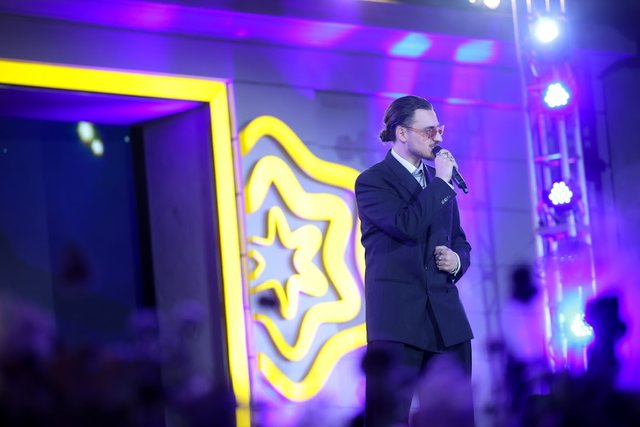
When Alisi released the song "Nân", created by him, Desara and Erjet, I remember sending him a message that went something like this: "I can't believe how three young people like you created such a song!"
Often, we adults are wrong. We think that in order to express great feelings, strong emotions and turn them into art, you have to be mature, have created experiences, have suffered... I have the impression that many of us did this in this case as well. I have been following the online debate about this song closely. To be honest, more than a debate about Alice, it seemed to me like a reflection of the symptoms that our society is going through: do we want to go to Europe and represent ourselves as ourselves, or "enough with pain and tears", do we need to change the way we present ourselves a little and adapt to something catchier, more for TikTok?
The song was also accused of being created by artificial intelligence. Of course, no one provided evidence for this; we simply implied that such a “perfect” song could not have been created by humans… and, ironically, we expressed this opinion about one of the most emotional songs with which we have represented ourselves in Eurovision in recent years.
Comments ranged from "fanatic" Shkodranians, who wholeheartedly defend everything created by a Shkodranian, to those who said there was more drama than necessary... and it was completely wrong to continue with these creations.
Then Alisi chose, I don't know if it was entirely intentional, or the only way that came naturally to him, to communicate his song in the way he knows how to do it best, by singing it live. He also made a piano version of it, sang it on sidewalks and stages from Himara to London, and everywhere he repeated the same story. I imagine that Mira, his mother, must have received the emotions of a lifetime in these months 😊 Everywhere the positive comments flooded, Alisi's voice and his humanity disarmed a good part of the critics. Now that the song is in the final, I have seen that even the biggest opponents are congratulating Alisi on this achievement.
This is just to provide a little context. Now I want to move on to my thoughts on what the sociology of music taught us in this case.
What I have noticed all this time is that this song is very popular with young people. Well, this invites us to think that Generation Z is like this: it does not hesitate to hide the emotions it has. A 23-year-old boy is not afraid of appearing less strong if he expresses longing for his mother. In fact, many studies on Generation Z show that this generation is more open in expressing emotions and less connected to traditional models of emotional masculinity, compared to previous generations. Young people need to express their emotions, to give them voice, to perform them. And to find themselves in such a universal topic as longing for their mother, and even to sing about it loudly. For us adults, there is a bell that rings here: our children want to express themselves; let them, without prejudice, even if this, to our great surprise, may sound “pathetic”. Maybe our children have gotten fed up with the models that the media has filled their minds with. Maybe they want to build their own new models, where getting excited and expressing it is not shameful.
Second, the song created in the Gheg language seems to better enable the expression of its epic. Our young people are not hesitating to speak publicly and create in the dialects they speak. We adults must understand that this is a subculture that only enriches our awareness and expression, so we must support and, possibly, even applaud the courage of young people to express themselves as they are.
Third, and here I will return to the thoughts expressed a week ago in volume 1, an artist can, with his super talent, create what he wants, without the intention of going viral, and still take the crowds with him. And this is the best thing that music can do: while entertaining, dare to create a sense of belonging. Perhaps it is no coincidence that sociologists of music like Simon Frith have seen music as a way to build identity and to give voice to the emotions that a generation feels together. And perhaps this is exactly what happened with “Nân”.
We criticized young people enough for being copies of each other, for no longer having values or emotions, for living to show off... and now, can we let them express themselves as they want, or is criticizing them our goal in itself?!
Many congratulations for tonight, Alis! Enjoy yourself, for your collaborators, and I hope that this is just the beginning of the journey of an artist who has a way of expressing himself, at all costs, by being authentic!


