

Changing the measure of "prison arrest"? The Supreme Court begins its review

2026-04-09 15:43:55
TiranaPost
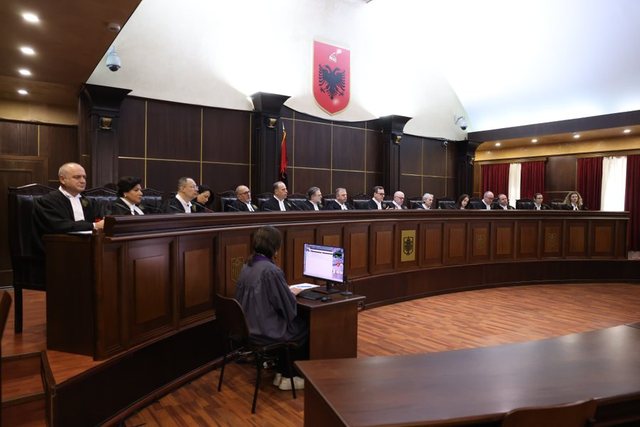
The Supreme Court has initiated proceedings to review the way the security measure "prison arrest" is imposed and how long it can last.
The United Colleges met for about 4 hours, at the initiative of President Sokol Sadushi, to discuss changing the practice that has been implemented for more than 15 years, since the unifying decision of 2011.
The purpose of this review is to make court decisions clearer, fairer and in line with European standards for restricting a person's freedom.
Under the new approach, courts must provide strong and concrete reasons why a person should remain in prison, and not simply rely on suspicions or criminal offenses. So, it is no longer enough to say that “prison arrest is appropriate,” but must explain why a lighter measure, such as house arrest, cannot be used.
Another important change relates to the duration of detention. For each extension of the measure, the court must provide new reasons why the person should continue to remain in prison. The burden of proof should not fall on the accused, but on the prosecution and the court.
The High Court also relies on the decisions of the European Court of Human Rights, such as the cases of "Hysa", "Gëllçi" and "Muçaj" against Albania, which emphasize that detention decisions should be based on concrete facts and not on general arguments.
After the review is completed, the Supreme Court is expected to issue a new decision, but it is not yet known when it will be made.


