

US and Iran exchange fire after US helicopter shot down in Hormuz

2026-06-10 08:57:22
TiranaPost
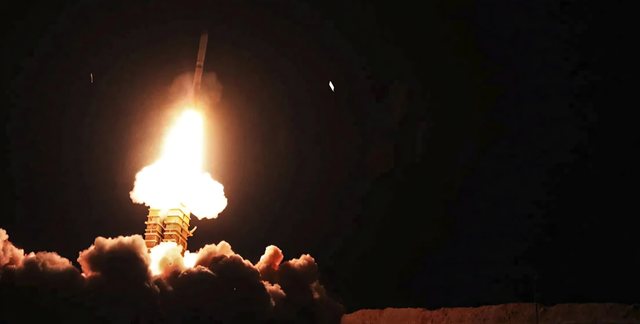
Shortly before the start of the operation, Donald Trump declared that there would be a very strong retaliation, while Tehran responded with threats of retaliation and accusations of an attack on the US 5th Fleet in Bahrain.
The confrontation between the United States and Iran is entering a new and particularly dangerous phase, after the US armed forces launched a series of air strikes against military targets in southern Iran in the early hours of Wednesday, in retaliation for the shooting down of a US Apache helicopter in the Strait of Hormuz. Shortly before the start of the operation, Donald Trump declared that there would be a very strong retaliation, while Tehran responded with threats of retaliation and accusations of an attack on the US 5th Fleet in Bahrain.
US attacks in southern Iran
The US Central Command for the Middle East (CENTCOM) announced that it had completed the strikes that it described as acts of self-defense against Iran. The operation was launched on the orders of US President Donald Trump, in response to the downing of a US AH-64 Apache helicopter the day before. CENTCOM further added that the strikes were in response to recent attacks on US forces and international ships in the region.
"CENTCOM forces struck air defense systems, ground control stations, and surveillance radar facilities near the Strait of Hormuz with precision munitions, using U.S. Air Force and Navy fighter jets," the command said via the X platform.
Minutes before the official announcement of the military operation, Donald Trump reacted sharply to the downing of the Apache. In a telephone conversation with a journalist from ABC News, the US president declared that there will be a very strong response. The American network noted that the statement was made just minutes before CENTCOM announced the start of attacks against the Islamic Republic.
"I believe the response needs to be very strong, very strong," he said.
Explosions in strategic areas around the Strait of Hormuz
Iranian state media reported that powerful explosions were heard in several strategic areas around the Strait of Hormuz. According to reports, explosions occurred on the island of Qeshm, in the city of Bandar Abbas and in the province of Jask. A correspondent for the state-run IRIB network in Jask said that the explosions were heard at around 02:35, while other Iranian media reported similar information for Qeshm and Bandar Abbas.
The Tasnim news agency also reported that the targets of the attacks were the port of Jask and a facility in the Kuh Mobarak area. Qeshm Island is considered an important part of Iran's defenses around the Strait of Hormuz, while Bandar Abbas is home to one of the country's most important naval and air bases. Jask also has a strong naval presence and is a strategic commercial port east of the strait.
Tehran talks about attack on 5th Fleet
The Islamic Revolutionary Guard Corps (IRGC) announced that it responded to the US attacks with an attack on the US 5th Fleet in Bahrain. A statement published by the Tasnim news agency said that the Revolutionary Guards' naval forces launched a drone attack at 02:30 am against the US 5th Fleet in Bahrain. So far, there has been no independent confirmation of this claim, while there have been no reports of air raid sirens being activated in Bahrain in recent hours.
The Revolutionary Guard also claimed that the US strikes hit the areas of Jask, Shirik and Qeshm, damaging a communications tower in Shirik and destroying two water tanks in the Bamani area. Hours after Tehran's announcements, Bahraini authorities activated air raid sirens. The country's Interior Ministry urged citizens and residents to remain calm and move to the nearest safe place.
The country's military announced that air defense systems were intercepting hostile air targets in accordance with established operational protocols and called on citizens to follow the instructions of the competent authorities. On the other hand, Iranian Foreign Minister Abbas Araghchi warned that the country's armed forces would respond to the US attacks.
"Despite defeats on the battlefield, the US chose to test our resolve. Our powerful armed forces will not leave any attack or threat unanswered," he said in a post on the X platform.
Shortly afterwards, state-run IRIB television reported that the US military operation had ended and that the situation was calm for the time being, despite earlier explosions in various parts of Iran's southern coast. The latest developments raise concerns about further escalation in the Persian Gulf region, at a time when tensions between Washington and Tehran are already at extremely high levels following the downing of the US Apache and the threats from both sides that followed.


