

The first question the scientists who spliced DNA asked themselves

2026-05-29 18:30:00
TiranaPost
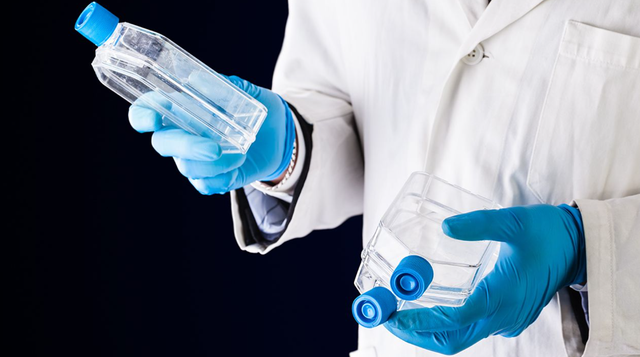
Recombinant DNA, or DNA created by artificially combining genes from more than one organism, has transformed modern medicine, helping to birth the biotechnology industry and paving the way for countless new treatments. However, as a short documentary from Science Communication Lab shows, it is a revolution born of controversy. Early experiments caused alarm both within the scientific community and among the public, with fears that tampering with the “building blocks” of life could have unpredictable consequences, even being compared to the birth of the nuclear bomb.
The film explores the early days of modern biotechnology through archival footage and interviews with some of its central figures. Among them is the late American biochemist Paul Berg, winner of the Nobel Prize in Chemistry in 1980 and widely considered the first creator of a recombinant DNA molecule, and his former student Janet Mertz, an American biochemist whose important but underappreciated work made this discovery possible.
Revisiting this revolutionary moment in science and perhaps even in human history, the film shows how scientific discovery is shaped by social and political forces, often as a result of distributed and collective efforts, even though only a few well-known names end up in history.
Artificial DNA splicing (recombinant DNA) is not "bad" in itself, the risk that initially concerned scientists was what could happen if it was used uncontrolled or incorrectly.
Here were the main fears:
1. Dangerous, unpredictable microorganisms
If you modify bacteria or viruses, you can create organisms that behave differently than expected: stronger, harder to control, or with new abilities.
2. The risk of release into the wild
Scientists were concerned that a modified organism could "escape" from laboratories and spread into the environment, affecting ecosystems.
3. Unknown health consequences
At the time, it was not well known how the human body might react to new proteins or products created from combined DNA. There could be allergies or unexpected biological effects.
4. Potential misuse (dual use)
Like any powerful technology, there was a fear that it could also be used for harmful purposes, for example the creation of more dangerous biological agents.
5. Irreversible impact on nature
Unlike many chemical experiments, genetic changes can replicate themselves in living organisms, so the effects are not easily limited.
In the end, most of these fears were not realized because very strong regulations were put in place (such as the Asilomar conference in 1975), which established safety standards for modern biotechnology.


