

What are thermobaric weapons that absorb oxygen and then explode everything

2022-03-03 09:25:43
TiranaPost
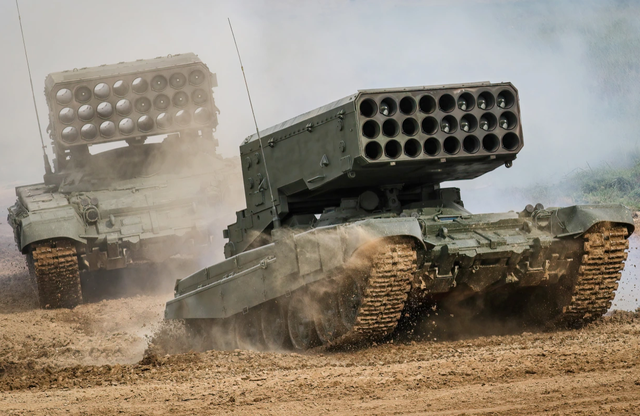
Allegations that Russia may be using thermobaric weapons in Ukraine have raised fears of possible destruction that could come from attacks with so-called vacuum bombs.
The use of these weapons has been declared by Oksana Markarova, Ukraine's ambassador to the United States. She said on Monday the Russian military had used a vacuum bomb, which sucks oxygen from the air to then cause a huge explosion. Markarova did not provide additional details, but it was foreign media that independently investigated and obtained information about thermobaric weapons. The risk increases after CNN photographed such weapons entering Ukraine.
"It's just a terrible, destructive weapon," said David Johnson, a retired U.S. Army colonel.
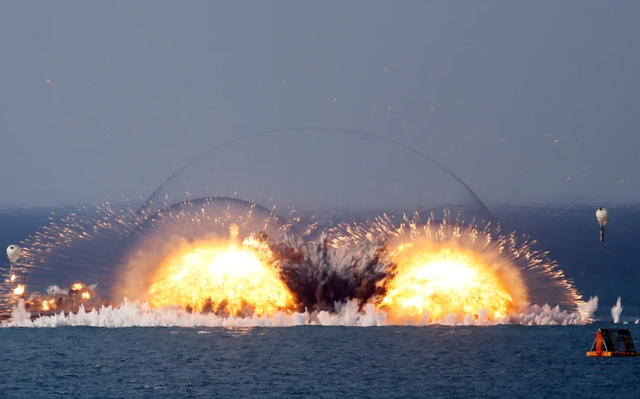
The explosion of such a bomb in 2016
What is a vacuum bomb?
Thermobaric weapons, or vacuum bombs, are a type of two-phase ammunition that creates large explosions. It is fired through a racket or artillery shell. The first stage spreads to the area where an aerosol similar to evaporated gasoline is dumped. The second phase of the strike then ignites the aerosol fog, creating a large explosion, flame, a large pressure wave, and an oxygen vacuum.
Johnson said thermobaric ammunition is sometimes known as a 'poor man's nuclear weapon' because it can wipe out anyone in the range. Victims can be killed by the blast or by the shock wave accompanying the fire, but they can also die from lung rupture due to lack of oxygen.
The type of thermobaric weapon that has been observed with Russian convoys inside Ukraine is known as the multiple TOS-1A rocket launcher. It has a radius of about 4 km and an explosion radius that extends about 304 meters. This weapon evaporates everything it finds ahead.
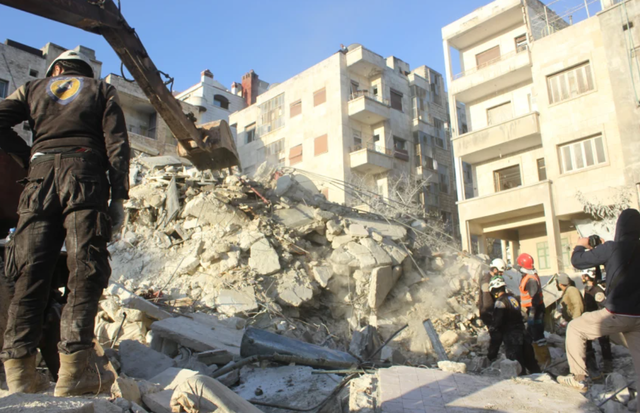
Thrown inside a building in Syria in 2017
Have such weapons been used before?
These types of thermobaric weapons have been in development since the 1970s. They were used by Russian troops in Chechnya in the 1990s. US forces also used thermobaric weapons in Afghanistan in 2017 to destroy cave and tunnel complexes, Johnson said.
Weapons are sometimes called 'bunker explosives' because they can effectively destroy defensive barriers.
If such a bomb were dropped inside an enclosed space, building for example, nothing and no one would survive inside that space.
"Even if you do not die immediately from the explosion, death can be slower than the pressure of the lack of oxygen that this weapon absorbs," says the colonel.
How dangerous are these weapons?
Despite the terrible destruction that thermobaric munitions can cause, there are no laws prohibiting their use in warfare, although they are widely condemned by non-governmental organizations. The use of such weapons against civilians is prohibited by the Geneva Conventions and may constitute war crimes.
"While it is not clear whether Russian forces have already used vacuum bombs in Ukraine, I fear it is only a matter of time," Johnson said.


