

Who was Juliette Drouet, Victor Hugo's lifelong lover who forgave his betrayals and lived an isolated life?

2025-04-11 14:44:38
TiranaPost
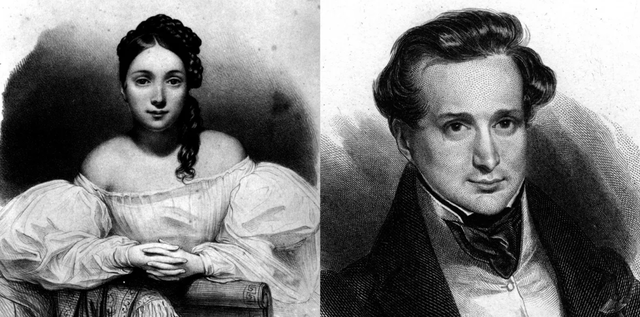
A day after her birthday, let's remember who Juliette Drouet was, the lifelong lover of writer Victor Hugo who led a secret life.
Roots and childhood
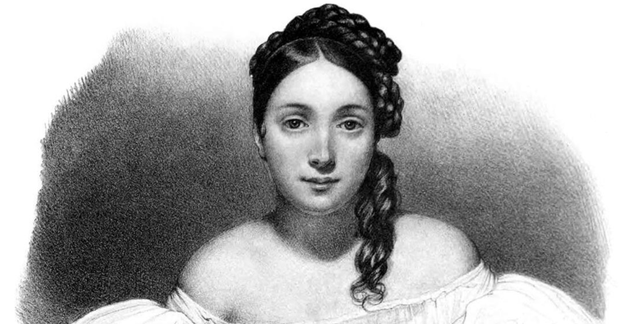
Juliette Drouet, born Julienne Josephine Gauvain on 10 April 1806 in Fougères, Brittany, was the daughter of a dressmaker and a maid. She was orphaned by her mother a few months after birth and by her father the following year, and was raised by her uncle, René Drouet. At an early age, she received a religious education in Paris, where she demonstrated early literary and artistic talent, preparing her for the public life that would follow.
The beginning of his career and meeting Victor Hugo
Around 1829, Juliette began her career as an actress in Brussels and then in Paris, adopting her uncle's surname for the stage. In November 1833, during the premiere of Lucrezia Borgia in which she played Princess Négroni, Victor Hugo noticed her beauty and attractive presence. This meeting marked the beginning of a relationship that would last over fifty years.
Sacrifice and the closed life
After meeting Hugo, Juliette immediately left the stage and devoted her life to her love. He placed her in a secret apartment near his house and asked her not to go out alone, to maintain privacy and avoid potential rivals. For decades, she lived a secluded life, appearing in public only in the company of the poet.
Secretary and travel companion
Juliette was not only his lover, but also his secretary and inseparable companion. She wrote thousands of letters rich with feelings and thoughts, becoming the architect of their lifelong correspondence. In 1852, she followed Hugo to his exile in Jersey, and in 1855 to Guernsey, standing by him even in the most difficult political conditions.
Correspondence and the anniversary of love
Each of Juliette’s letters was a literary work that testified to the depth of her passions. Every February 16, from 1834 to 1883, they celebrated the anniversary of their first night together, a personal detail that Hugo incorporated into his description of Marius and Cosette’s marriage in Les Misérables. This intimate tradition demonstrates the level of commitment and the importance of shared memories in their lives.
Life in exile and separated homes
During his exile in the Channel Islands, Hugo lived at Hauteville House in Guernsey, while Juliette stayed in a small house he had rented from her, in a position from which she could see his apartment. Although distant, her presence was constant and indispensable, keeping the poet's morale high in times of uncertainty.
Betrayals and dealing with jealousy
Although their love was strong, Hugo was not always faithful. He entered into a relationship with Léonie d'Aunet between 1844 and 1851, had a brief romance with the actress Alice Ozy in 1847, and in 1873 betrayed Juliette with her maid, Blanche. However, Juliette often forgave him, seeking his support and experiencing intense jealousy, but always remaining by his side.
Last years and death
Juliette's last letter, dated 1 January 1883, closes with a powerful "Je t'aime", summing up the full intensity of her love. She died on 11 May 1883 in Paris, aged 77. Hugo's family advised him not to attend her funeral due to social stigmatisation, a decision that showed the complexity of the relationships between love, honour and public opinion.
Legacy and influence
The rich correspondence between Juliette Drouet and Victor Hugo has been published in volumes such as “My Beloved Toto: Letters from Juliette Drouet to Victor Hugo 1833‑1882” and in Project Gutenberg editions, offering a unique window into the private life of one of France’s greatest writers. Their correspondence has been studied by literary historians and critics, revealing the profound impact their love had on Hugo’s work and on the concept of romantic love in the 19th century.


