

What is known so far about the hantavirus outbreak on the MV Hondius ship?

2026-05-07 11:30:09
TiranaPost
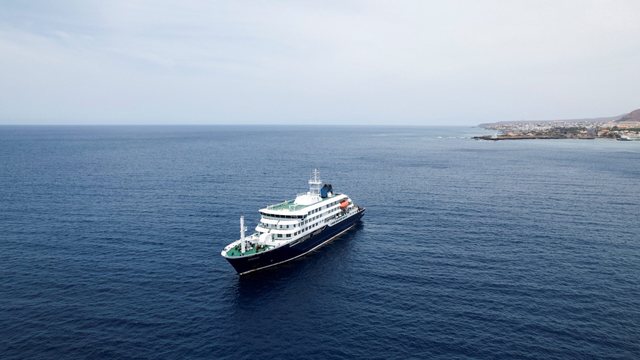
As the World Health Organization continues its investigation into the origin of the “Andean” mutation of hantavirus, the situation on the cruise ship “MV Hondius” remains tense. It is suspected that the virus was transmitted after some passengers came into contact with rodents while on a birdwatching trip in Argentina.
The ship, which advertised the trip as "an experience you will remember for a lifetime," has now become the center of an international health alert. There are 149 passengers on board from 23 different countries, while WHO experts are conducting continuous checks for traces of rodents and new cases of infection.
Passengers in isolation
Passengers have been asked to stay in their cabins, use masks and sanitizers, and practice physical distancing. The atmosphere on the ship has been compared by many to the period of isolation during the COVID-19 pandemic.
The situation also received widespread attention on social media after American travel vlogger Jake Rosemarin posted a video of himself in tears from his cabin.
"We are not just a story or news headlines. We have families and people waiting for us at home," he said.
Later, the influencer posted other videos showing the crew taking care of the passengers and providing psychological support.
Conspiracy theories and online reactions
Another travel influencer, Kassem Hato, stated that the situation was under control and that passengers were calm, in an attempt to avoid panic.
Various conspiracy theories began circulating online, with some claiming that passengers were being forcibly held in cabins, while others went so far as to claim that the ship did not exist at all.
Three victims and suspected cases
The drama began on April 11, when a Dutch passenger died under unclear circumstances. The WHO later confirmed that he had been infected with hantavirus. His wife was hospitalized in South Africa.
On April 27, another passenger was taken to hospital in critical condition, while on May 2, a German tourist died on board. So far, three cases of hantavirus have been confirmed and at least five more suspected cases.
Authorities suspect the outbreak is linked to the "Andean" mutation, a rare variant that can also be transmitted from person to person and causes severe pneumonia.
What is the “Andean” mutation?
This variant of hantavirus is carried by a species of rat common in rural areas of Argentina. Infection usually occurs through contact with the urine, feces, or saliva of the rodents.
Unlike other forms of hantavirus, the "Andean" mutation can also be transmitted between humans, although cases are rare.
According to experts, the infection can be fatal in up to 40% of cases, while the WHO estimates that the risk of a global emergency currently remains low.


