

Withdrawal or relocation of American troops, what awaits NATO?

2026-04-16 09:46:47
TiranaPost
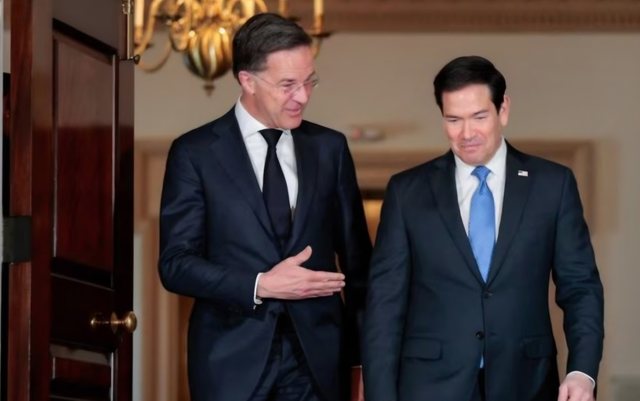
NATO Secretary General Mark Rutte's trip to the United States on April 8–12 was sensationally presented as a "decisive" moment for the military alliance.
As Washington grew increasingly angry at the perceived lack of help from European allies in bombing Iran and keeping the Strait of Hormuz open, it was said that President Donald Trump would try to withdraw the United States from NATO.
That was not the case when Trump and Rutte met at the White House on April 8. But the threat remains, as do U.S. criticisms of the alliance. However, there seems to be some way for NATO to remain intact and relevant, including continued defense spending and for Europeans to be more active in the Middle East. It could be rightly said that the former Dutch prime minister’s visit posed risks.
Trump had been attacking his allies for days, accusing European countries of "a very stupid mistake" and that "NATO has done absolutely nothing" regarding Iran.
He also renewed threats about his political plans for Greenland, further worrying Brussels, while Secretary of State Marco Rubio noted that Washington will “reexamine its relationship with NATO” after the campaign against Iran is over.
Criticism continued after the Trump-Rutte meeting, and the US president wrote on Truth Social that “NATO wasn’t there when we needed it, and it won’t be there when we need it again. Remember Greenland, that big, mismanaged piece of ice!!!” However, the relief in Brussels was palpable.
Withdrawal or relocation of American troops?
One source, speaking on condition of anonymity, said there was "relief that they didn't have a joint press statement or conference after the meeting, where we would have received even more public criticism."
Another said it was "a mixed situation."
"It wasn't very good, but it could have been worse; it was clearly a useful opportunity for Trump to vent his anger," he added.
"The very fact that the meeting took place just one day after the announcement of a two-week ceasefire was also seen as a 'fortunate coincidence'," as the trip had been planned for a long time.
Rather than aiming for a complete withdrawal of the United States from the alliance, something that requires an almost impossible two-thirds majority in the US Senate, it appears that Washington may consider relocating troops from countries it believes have not helped it on the Iran issue.
But this was something most European allies had expected anyway, as further limits on the number of US troops had been discussed in the military alliance for months, although no concrete figures have been given.
Në Evropë janë rreth 70.000 trupa amerikane të shpërndara në 30 baza, të cilat përdoren si për parandalim, ashtu edhe për të mbështetur operacione si ato në Lindjen e Mesme. Kjo dobishmëri nënkupton se shumica e kryeqyteteve evropiane besojnë se amerikanët do të qëndrojnë, ndonëse në numër më të kufizuar.
“Shtetet e Bashkuara nuk do të largohen, por do të luajnë rol dytësor në Evropë, por, në shumë mënyra, tashmë e bëjnë këtë”, tha një diplomat evropian për Radion Evropa e Lirë (REL), duke shtuar se çështja nuk është tamam “trupat në terren”, por njerëz si oficerët e inteligjencës, ku “një boshllëk i caktuar tashmë ekziston”.
Një NATO më evropiane?
Megjithatë, Rutte po përpiqej t’u jepte interpretim pozitiv gjërave.
Rutte, i cili në Bruksel shihet si “pëshpëritësi i Trumpit” në një mënyrë jo gjithmonë lavdëruese, duke vizituar SHBA-në pati një mundësi tjetër për të lavdëruar presidentin amerikan.
Në një intervistë për CNN-n pas takimit në Shtëpinë e Bardhë, ai tha se ishte “një diskutim shumë i hapur dhe i sinqertë, por gjithashtu një diskutim mes miqsh të mirë”.
Ai gjithashtu e pranoi se presidenti ishte “qartazi i zhgënjyer me shumë aleatë të NATO-s, dhe unë i kuptoj pikëpamjet e tij”.
Derisa disa diplomatë evropianë sugjeruan se jo të gjitha kryeqytetet e BE-së ishin të kënaqura me disa nga qëndrimet e Ruttes, veçanërisht pohimin e tij se nuk ka asnjë pikëpamje të përhapur në organizatë se lufta është e paligjshme, dhe të tjerë u ndien në siklet kur ai refuzoi të komentonte mbi kërcënimin e fundit të Trumpit për ta shuar një qytetërim të tërë, ata gjithsesi mendonin se takimi shkoi aq mirë sa mundej.
Më vonë, në një fjalim në Fondacionin dhe Institutin Presidencial Ronald Reagan më 11 prill, Rutte përshkroi atë që ai e sheh si një rrugë përpara samitit të ardhshëm të NATO-s në Ankara në korrik, duke kundërshtuar sugjerimet se aleanca është në rënie.
“Më lejoni të jem i qartë: kjo aleancë nuk po ‘pretendon se asgjë nuk po ndodh, siç do të thoshit ju në Shtetet e Bashkuara”, tha ai. “Aleatët e pranojnë, dhe unë e pranoj, se jemi në një periudhë ndryshimesh të thella në aleancën transatlantike. Evropa po e merr një pjesë më të madhe dhe më të drejtë të detyrës për të siguruar mbrojtjen e saj konvencionale. Dhe, nga kjo nuk ka kthim mbrapa dhe as nuk duhet të ketë”.
Ai theksoi se kur avionët rusë shkelën hapësirën ajrore të Estonisë vjeshtën e kaluar, ishin avionët italianë, finlandezë dhe suedezë që i zmbrapsën. Dhe, kur dronët rusë depërtuan në territorin polak vitin e kaluar, ishte një avion luftarak holandez F-35 që qëlloi ndaj tyre. Evropa dhe Kanadaja mund t’i rrisin shpenzimet për mbrojtje. Raporti vjetor i NATO-s tregoi se të gjithë aleatët, përveç Hungarisë dhe Sllovakisë, kanë rritur shpenzimet e tyre në vitin 2025 krahasuar me vitin e mëparshëm.
NATO-ja në Lindjen e Mesme?
Një diplomat i NATO-s theksoi se “Ankaraja do të jetë një festë buzëqeshjesh dhe do të jetë për një gjë të vetme: paratë, dhe në këtë drejtim po ecim mirë”.
But in the future, it will not just be about how much Europeans spend on their defense. They must prove their usefulness to Washington beyond their continent.
While much attention has focused on Spain, which refused to allow the United States to use its bases in the campaign against Iran, NATO has been keen to point out that most other allies have tried to help.
Most importantly, Germany, Portugal, and the United Kingdom have allowed Washington to use bases in their countries. France has also given the green light for the presence of American aircraft for missions supporting Gulf partners.
And Souda Bay on the Greek island of Crete, for example, was used by the American aircraft carrier, the USS Gerald R. Ford, for resupply, fuel, and repairs before proceeding to Split in Croatia for further maintenance.
NATO will be keen to highlight these examples further in the future.
Although Trump made no concrete demands at the Washington meeting, NATO officials acknowledge that individual allies will need to do more.
Oana Lungescu, a former NATO spokeswoman who now works as a researcher at the Royal United Services Institute for Defence and Security Studies (RUSI), told REL that more concrete things could be on the horizon before or during the Ankara meeting.
"While there is no discussion of a NATO mission at this stage, Rutte is playing a key role behind the scenes in coordination with British Prime Minister Keir Starmer and French President Emmanuel Macron, forming a coalition of the willing to secure the Strait of Hormuz once hostilities end and to carry out careful military planning," she said.
"Allies could also consider ways to put Middle East stabilization on the agenda of the NATO summit in Ankara in July, inviting Ukraine and partners from the Gulf and Indo-Pacific, many of whom are already involved in the coalition of the willing."
*This article was published by REL and reposted by Tiranapost.al


