


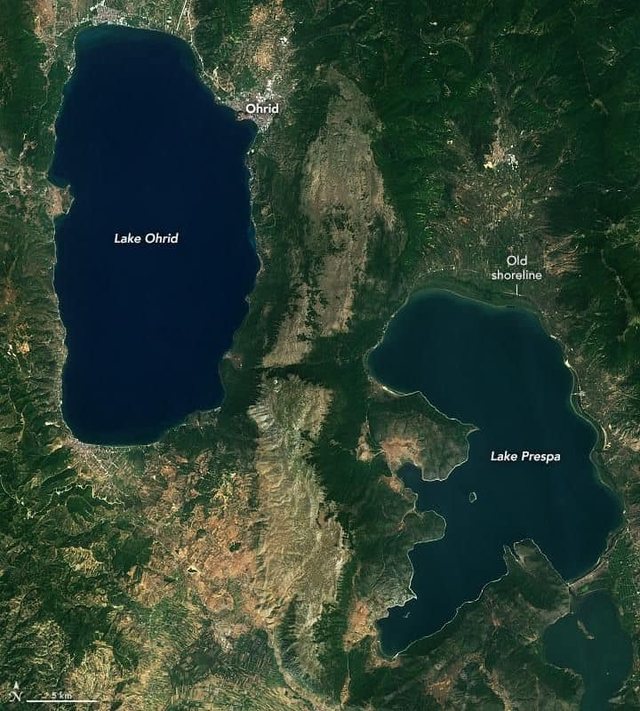
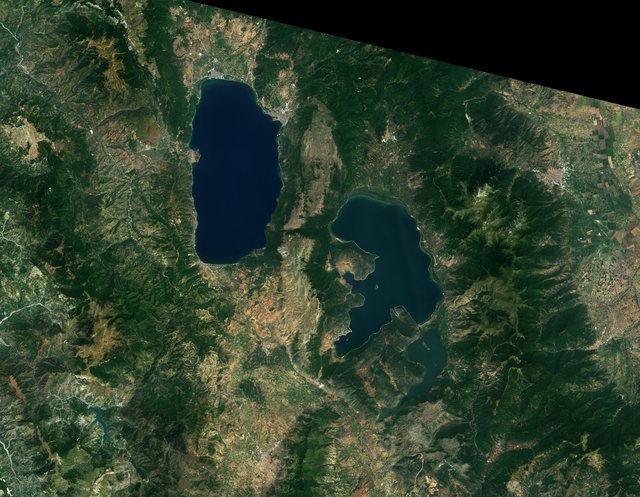
Lake Ohrid and Lake Prespa are featured in one of NASA's latest satellite images.
The rare natural color view of our two lakes, known as among the oldest on the European continent is amazing captured on August 19 by OLI-2 on Landsat.
According to the description dedicated to this miracle of nature as NASA calls it, Lake Ohrid and Lake Prespa are 2 of the oldest lakes that are thought to date back 1 million years on Earth.
Lake Ohrid is notable not only for its antiquity but also for its bidiversity, with more than 1,200 species of plants and animals, giving the lake one of the highest concentrations of biodiversity in the world.
The longevity of Lake Ohrid has allowed the evolution of 200 species found nowhere else, including unusual snails, ducks and trout.
Lakes owe their longevity to consistent tectonic activity that causes the land beneath them to sink, creating grabens or low valleys. This prevents the lakes from turning into swamps over time, as most lakes do after a few thousand years.
Most of the world's millions of lakes are less than 18,000 years old and were formed when glaciers melted at the end of the Ice Age.
Gjeologët klasifikojnë vetëm 30 liqene, duke përfshirë Ohrin dhe Prespën, si “të lashtë”, përcaktuar nga studiuesit për ata lumenj që kanë më shumë se një cikël të epokës së akullit (të paktën 130,000 vjet).
Gjeologët mendojnë se rreth 20 liqene në Tokë kanë ekzistuar për më shumë se 1 milion vjet.
Pjesa më e madhe e ujit të Ohrit vjen nga burimet nënujore, por rreth 20 për qind e tij derdhet nga Prespa e lartë përmes kanaleve nëntokësore karstike.
Ndërsa nivelet e ujit kanë mbetur relativisht të qëndrueshme në Liqenin e Ohrit, në dekadat e fundit Prespa ka pësuar rënie të ndjeshme si në sipërfaqe ashtu edhe në vëllim.
In a recent study, based on nearly four decades of Landsat observations, scientists reported that Lake Prespa lost 7 percent of its surface area and half of its volume between 1984 and 2020, likely due to increased water withdrawal. for agriculture.


