By Manjola Lloja Bushati/ The Sociology of a Protest
Day 56 of the flamingo protest.
My observation continues, with even more curiosity, but also with attitude. The communication around this protest has received extraordinary attention. Many forms, many attitudes, many contents. Of all this, what stands out to me most is the great difference between generations.
There is nothing new in saying that the generation of parents and the generation of young people in our country see reality so differently. My question is another, more solution-oriented one: from these very different ways of seeing reality, what should we choose to keep and what should we change?
Let's get it right. In this case, and not only, my scale is tilted towards the young. But before I argue this, I want to modestly try to explain in simple words the situation of the parents, as I understand it.
Raised without freedom, the parents of young people in their 20s and 30s lived in a deficit economy. They were not taught to trust institutions, and when the rules of society were overturned, survival became their priority. Many felt that in order to get ahead, they had to save themselves and their families.
Today it may be easy for us to label them selfish, but they were people who had lived for decades without opportunity and, suddenly, found themselves in a reality they had dreamed of but did not recognize. Tired of the abuse of the "common good," many of today's 50-60-year-olds turned a sentence that we have all probably heard into a principle of life: "To each his own."
In the attempt to look only at ourselves, during the long years of economic and social transition, trust, a sense of community, public interest, and civic responsibility gradually weakened in our culture. Without realizing it, we forgot that when personal good is separated from the common good, in the end we all lose.
And now it's the young people who are "shouting" this to us, insistently.
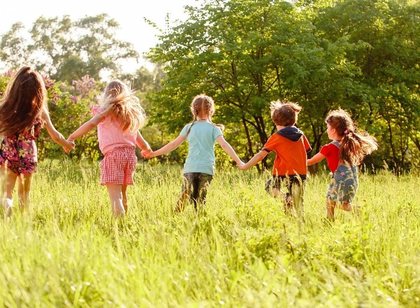
They have not experienced dictatorship, nor the Albanian wonders of the 90s and early 2000s. They are growing up and being formed in an open world, with mobility, information and the internet. Therefore, they naturally understand a simple truth: you cannot be good only inside your home.
I hear them speak and defend with passion and argument that the environment is shared, just like the city, education, institutions, and democracy itself. They understand that the quality of each person's life depends on the quality of the common life.
And let me tell you another simple truth, although perhaps painful for us. Young people are loving Albania in a different way: by believing that it can be changed and by working to change it. If not more strongly, at least with more reason and logic than we do. We become patriots for football matches or hypothetical successes in European music competitions, but we often say that "this country is not made". Young people have understood that a country is made and that, in the end, it is its people who make it.
For this reason, the debate that this protest has sparked, in my opinion, is not partisan. In fact, it would be a big mistake to simplify it that way. Here we are facing a cultural change, a clash between two ways of understanding society and its development.
I want to believe that this is a good sign. It is the beginning of understanding that survival, which the recent past of Albanian society taught us, is no longer enough today.
If we want to move forward, we must restore the belief that our own good cannot be built on the weakening of the common good. And this is what young people are trying to communicate to us every day.
The generation of parents was forced to learn the culture of survival; today's generation is trying to build a culture of resistance. Not as a rejection of any change, but as a determination to protect the public interest, to refuse to accept that the interest of the moment is more important than the common interest and that development is built at the expense of the common.
Maybe I'm too optimistic, but I believe that the flamingos' resistance, whether on the boulevards of Tirana or as their determination to build the future in their country, will be remembered as the moment when this generation began to tell Albanian society that survival is no longer enough.
A mature society is not measured only by the ability to overcome difficulties, but above all by the ability to protect what belongs to everyone.
And, perhaps for the first time in a long time, the call for more maturity is not coming from the older generation. It's coming from the younger generation.
Honestly, it's time we listened to them.
.